

Stump Grinding Versus Stump Removal Explained
Compare stump grinding versus stump removal to choose the right solution for your Lafayette yard, budget, drainage, landscaping, and future plans wis…
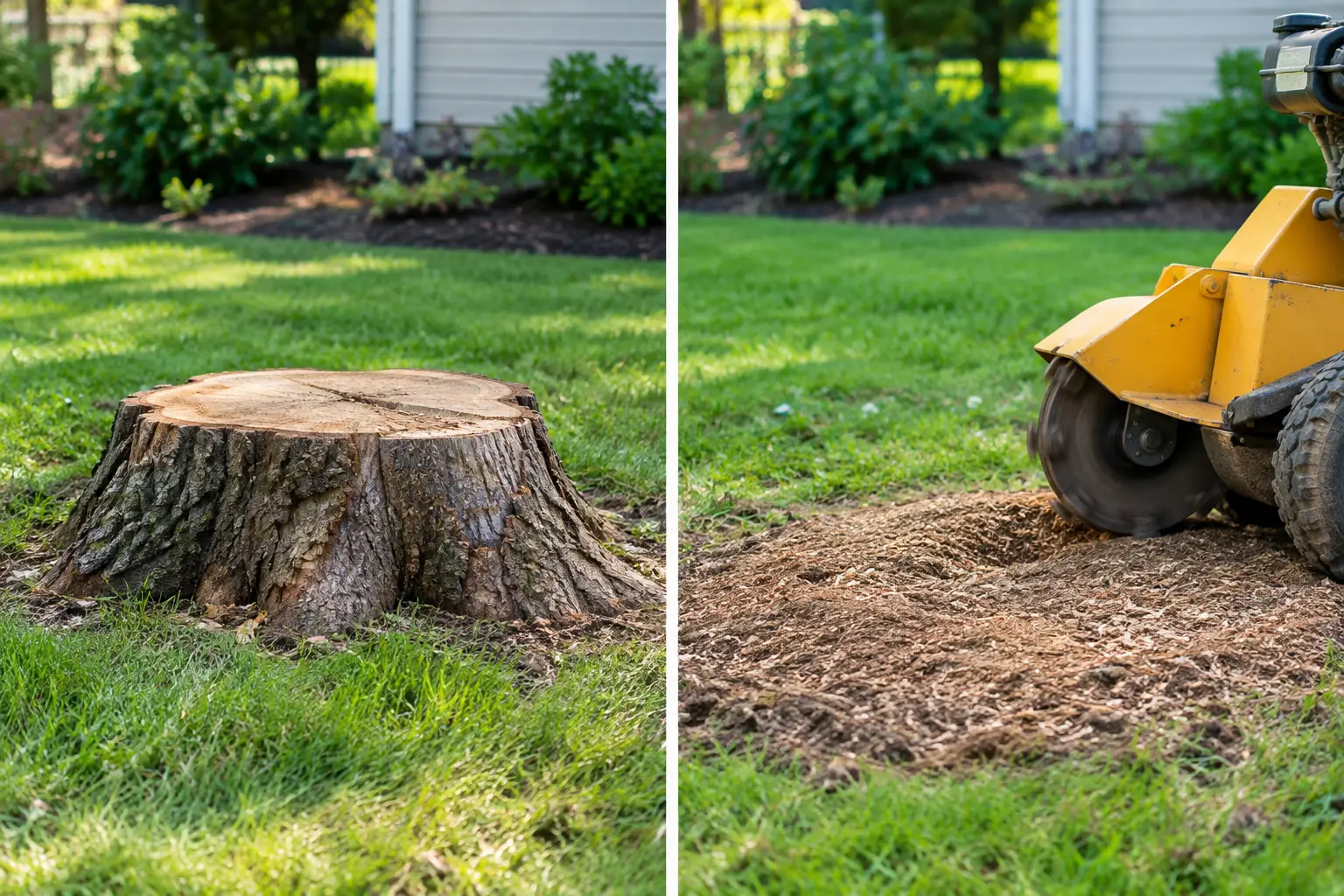
A stump can make an otherwise well-kept yard feel unfinished. It catches mower blades, takes up usable space, attracts insects, and can become a trip hazard for children, guests, and anyone working outside. Seeing stump grinding before and after helps homeowners understand what the service actually changes - and what still needs attention once the equipment leaves.
For properties in Lafayette and throughout Acadiana, stump grinding is often the final step after a tree removal. It is also a practical standalone service when an old stump has been sitting in the yard for years. The goal is simple: remove the visible obstacle below ground level so the area is safer, cleaner, and ready for the next use.
Before grinding, the stump is only part of the issue. Its root flare may spread several feet beyond the cut trunk, making mowing and landscaping difficult. Depending on the tree species, age, and location, surface roots may create raised areas that interfere with grass growth or outdoor projects.
An old stump also changes as it decays. Wood-boring insects, ants, termites, and fungi are naturally drawn to deteriorating wood. A decaying stump does not automatically mean termites will move into a home, but leaving a food source close to structures is rarely ideal. In south Louisiana's warm, humid conditions, old wood can break down quickly and become a frequent pest concern.
Appearance matters, too. A stump near a driveway, patio, pool area, or front landscape bed can make the property look neglected even when the rest of the yard is maintained. Homeowners often notice it most when they are preparing to sell, adding a fence, installing a shed, or reclaiming space for children and pets.
The most immediate after-effect is that the stump is no longer standing above the lawn. A professional grinder uses a rotating cutting wheel to reduce the stump into wood chips, typically several inches below the surrounding grade. The exact depth depends on the stump, nearby utilities, future plans for the area, and site access.
After the work is complete, the area usually contains a shallow depression and a mix of soil and wood chips. This is normal. Grinding removes the stump itself, but it does not pull out every underground root across the yard. Most remaining roots will gradually decay below the surface without causing a problem.
The finished area looks dramatically different from a standing stump, but it is not always instantly ready for fresh sod or a new tree. The best next step depends on how the space will be used. If the goal is lawn restoration, excess chips may be removed or spread elsewhere, then the depression can be backfilled with clean topsoil and seeded or sodded. If the goal is a flower bed, the site may need additional soil preparation before planting.
A clean job site matters just as much as the grind itself. Professional stump work should include containing or removing the bulk of the grindings, clearing hard surfaces, and leaving the surrounding lawn as orderly as conditions allow. Apex Tree Care approaches stump work as part of property restoration, not simply a machine pass through the yard.
Homeowners are sometimes surprised when a formerly ground stump area sinks slightly after a heavy rain or several months of settling. This happens because underground roots and remaining organic material continue to decompose. Air pockets in the soil can close, and the material placed over the grind area may compact.
A small amount of settling is common and does not mean the stump grinding was incomplete. Adding another layer of topsoil and reseeding the spot is often all that is needed. Areas with large stumps, extensive root systems, or especially wet soil may need more than one touch-up before the lawn becomes level.
Stump grinding solves the above-ground problem efficiently. It removes the prominent tripping hazard, opens up mowing space, improves the appearance of the yard, and reduces the amount of decaying wood exposed at the surface. It is usually less disruptive than excavating the entire stump and root system, especially near lawns, irrigation lines, sidewalks, driveways, and established landscaping.
However, grinding is not the same as full stump extraction. Deep roots remain in the ground and slowly break down over time. In most residential settings, that is exactly the right trade-off: less disruption now, with natural decomposition below the surface.
There are situations where complete removal may be worth discussing. If you are installing a foundation, building a driveway, placing a large concrete slab, or excavating for major drainage work directly over the former tree location, remaining roots may be a consideration. A site-specific assessment helps determine whether grinding alone is appropriate.
Grinding also does not guarantee that a tree will never send up shoots. Some species can produce sprouts from living roots after the trunk has been removed. If that happens, small shoots can usually be cut back promptly. The response depends on the species and the condition of the remaining root system.
A little preparation makes the work safer and helps protect the rest of the landscape. The crew needs a clear route from the street or driveway to the stump, so move vehicles, lawn furniture, toys, potted plants, and other portable items from the work zone.
Mark or point out anything that may be hidden near the stump, including irrigation heads, landscape lighting, septic components, drain lines, decorative edging, and pet containment wiring. Public utility lines should be properly located before grinding begins. Private lines and systems are not always included in standard utility markings, which is why homeowner communication is important.
If the stump is close to a fence, home, air-conditioning unit, pool equipment, or utility area, experience matters. Grinding wheels throw wood chips, and the crew must manage the work area carefully. Professional equipment and strict safety measures help minimize risk while still allowing precise work in tight residential spaces.
The right restoration plan starts with your goal for the space. For a lawn, remove enough wood chips to prevent them from dominating the soil, add quality topsoil, level the area, and establish grass suited to the existing yard. Water consistently while new grass becomes established, particularly during dry periods.
For a planting bed, it may be possible to use some of the wood chips as mulch away from the new plants. Avoid mixing a large volume of fresh wood chips deeply into the soil where you plan to grow turf or ornamentals. As wood breaks down, it can temporarily affect available nitrogen near the surface. A layer of clean soil between the remaining grindings and new plantings creates a better starting point.
Planting another tree in the exact same location deserves some planning. The old roots, compacted material, and reduced soil quality can make the original spot less favorable for a new tree. Moving the new planting location several feet away is often the better choice, especially when selecting a tree with room to mature safely away from roofs, utility lines, and hardscapes.
A stump becomes more urgent when it interferes with regular mowing, blocks a repair or construction project, sits along a walkway, attracts persistent insects, or creates a hazard in an active part of the yard. It is also smart to schedule grinding soon after tree removal, before the stump becomes a long-term landscaping obstacle.
Wet ground can affect equipment access, and severe weather may shift scheduling, but professional crews can evaluate conditions and recommend the safest timing. The best result is not just a stump that disappears. It is a yard left safer, cleaner, and easier to use for the life you actually want to live outside.
If an old stump is keeping you from finishing a lawn project or using part of your property, a quick on-site assessment can clarify the safest, most practical path forward.

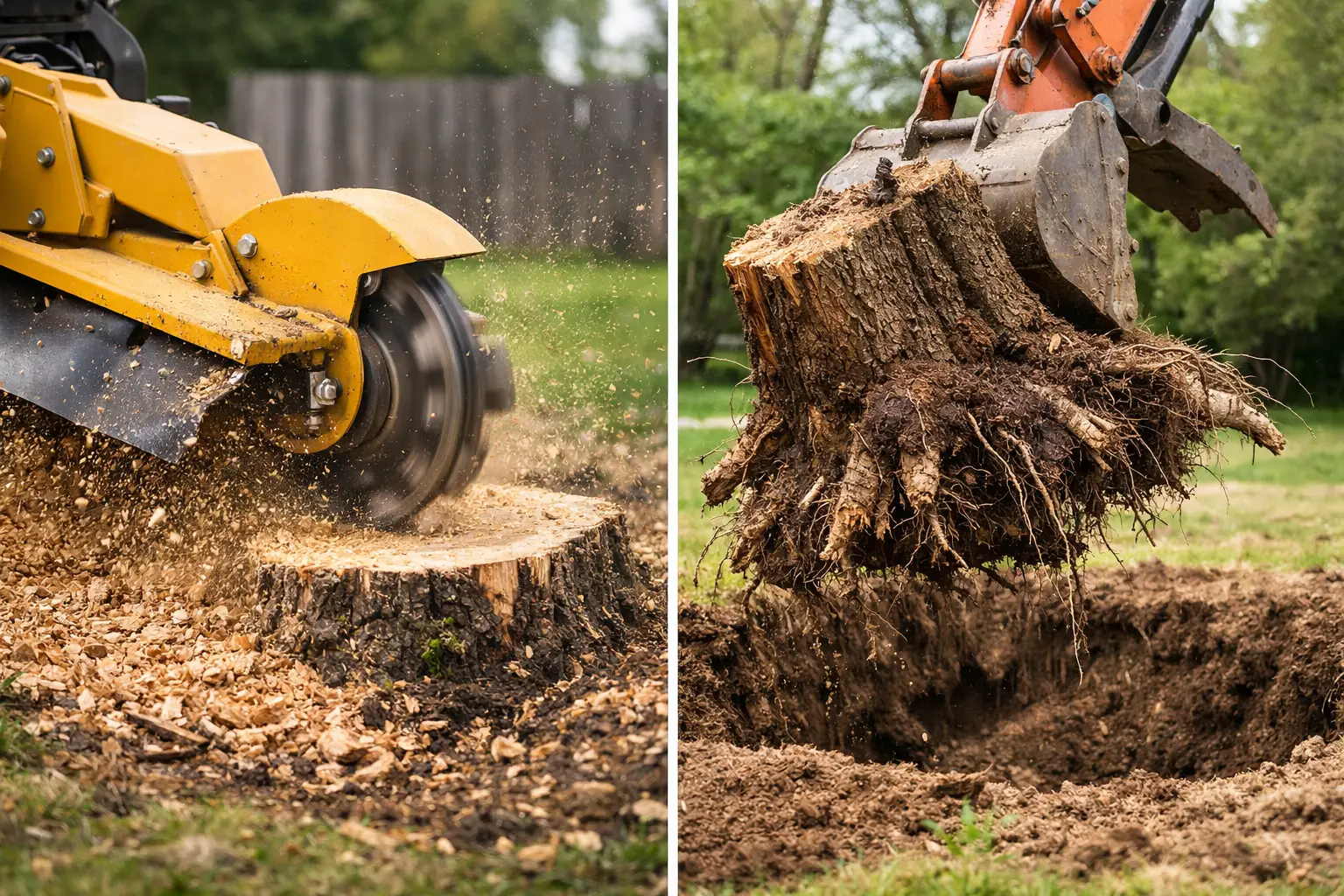
Compare stump grinding versus stump removal to choose the right solution for your Lafayette yard, budget, drainage, landscaping, and future plans wis…
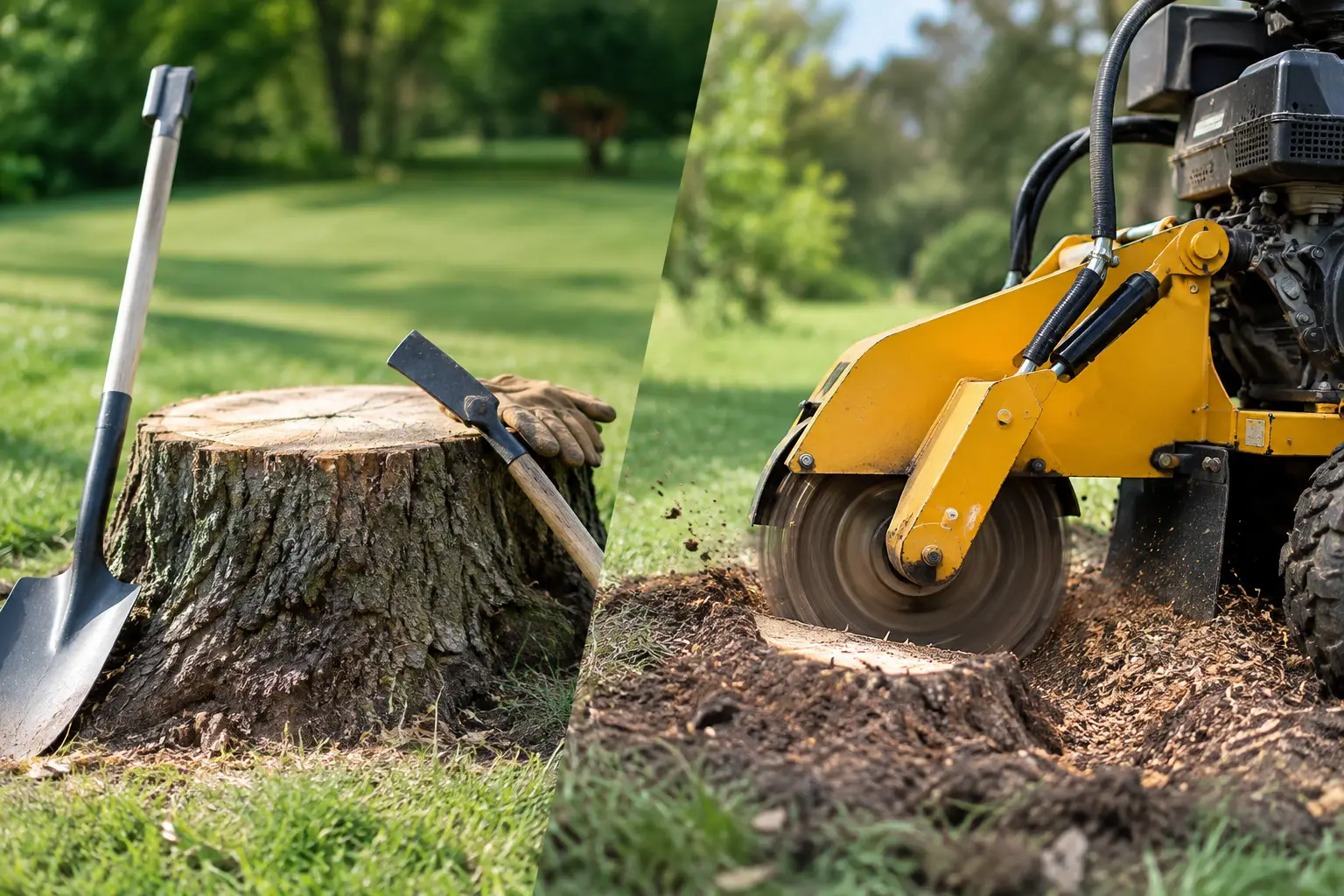
Compare manual versus mechanical stump removal for Louisiana yards, including cost, safety, cleanup, and the right choice for stubborn stumps near a…
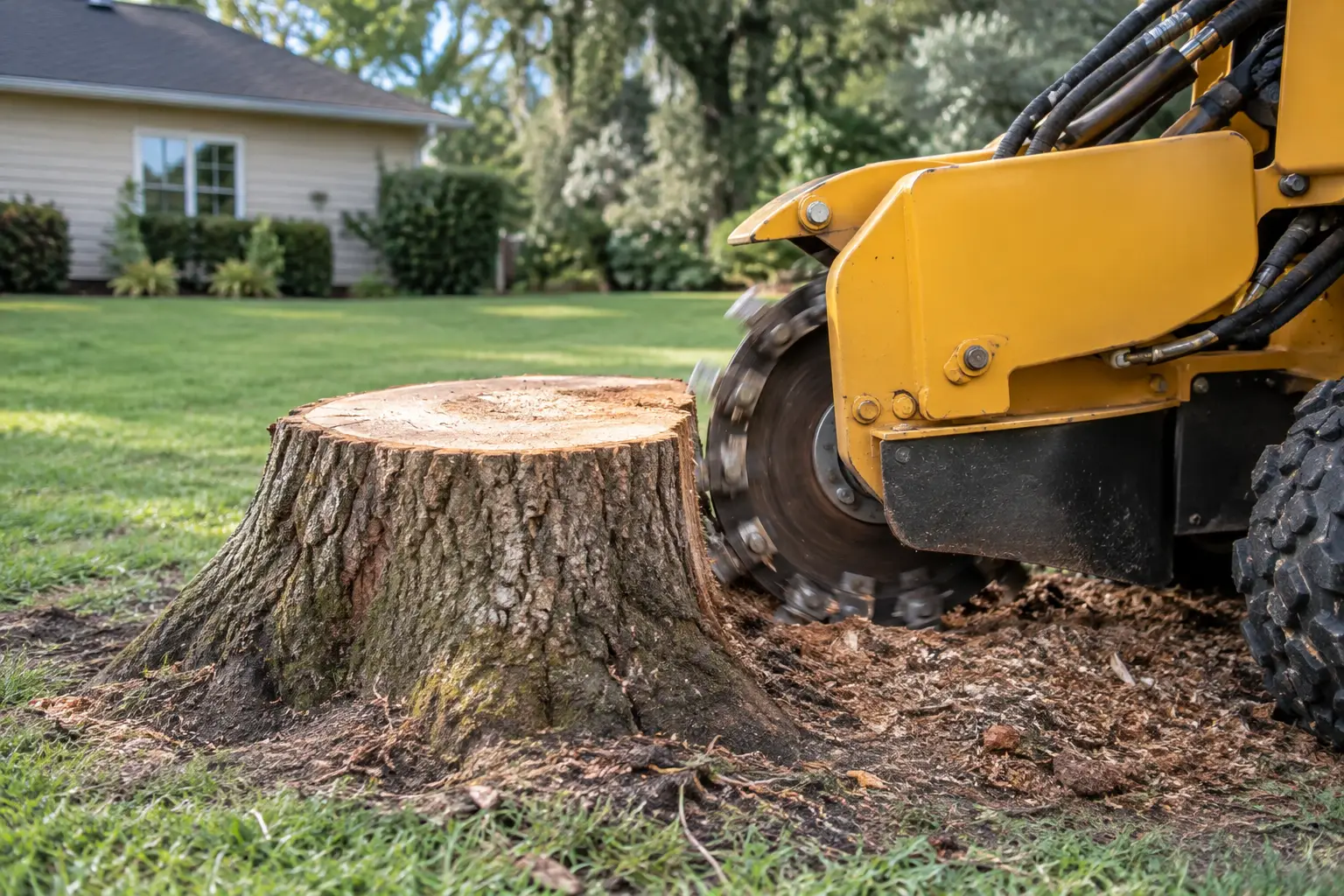
Compare the best stump removal methods for Louisiana yards, from professional grinding to full removal, and choose the safest fit for your property t…
Tell us about your trees and we'll get back to you, usually the same day.
“They were prompt for the actual survey and gave a fair estimate. Crew showed up and did the job ahead of planned date and did an amazing job.”
Loading the quote form…
Form not showing? Open the quote form or call (337) 568-2739.
Get a free, no-obligation estimate from Lafayette's locally owned tree service.