

Five Benefits of Stump Grinding for Your Yard
See five benefits of stump grinding, from safer yards and fewer pests to easier landscaping and a cleaner finish for your Lafayette property after re…
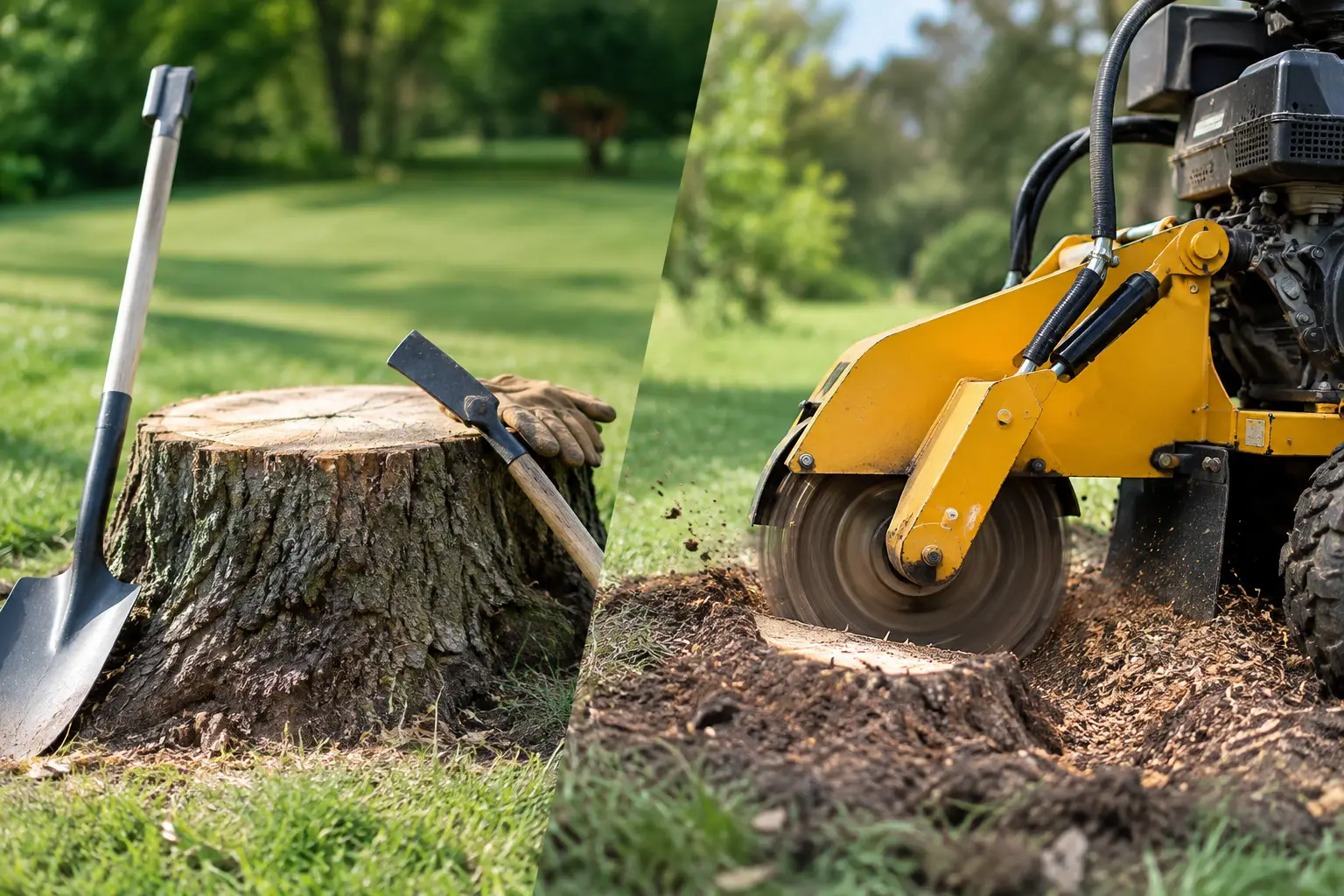
A stump can look harmless after a tree comes down, but it can keep a yard from being usable. It may catch a mower blade, attract insects, interfere with a new planting plan, or leave a trip hazard beside a driveway or patio. When comparing manual versus mechanical stump removal, the best choice depends less on the stump alone and more on its size, location, root system, and what you plan to do with the space next.
For homeowners in Lafayette and surrounding Acadiana communities, wet soil, mature tree roots, irrigation lines, fences, and close-set homes all affect the work. A small stump in an open corner of the yard is one situation. A large oak stump near a foundation, utility area, or landscaped bed is another entirely.
Manual removal means exposing the roots, cutting them with hand tools or a saw, loosening the stump, and pulling or levering it out of the ground. Homeowners may use shovels, digging bars, axes, loppers, reciprocating saws, chains, chains, and a vehicle or hand winch for additional pulling force.
The method can work well for very small stumps, young trees, or shallow-rooted species. If the stump is only a few inches across and there is plenty of room to dig, a determined homeowner may be able to remove it without bringing in heavy equipment.
The challenge is that the visible stump is only part of the tree. Major roots can extend well beyond the trunk, and older trees often have thick structural roots that resist cutting and pulling. Louisiana soil can also hold moisture after heavy rain, making excavation messier while increasing the weight of the root ball and surrounding soil.
Manual removal is usually most practical when the stump is small, access is limited, and the goal is full root removal for a garden bed or small planting area. It can also be a reasonable option when a property owner has the right tools, physical ability, and time to work carefully.
However, manual labor is not automatically the lower-cost solution. Tool purchases, disposal needs, repairs to damaged turf, and several weekends of work can add up. There is also a real risk of back injuries, cuts, damaged underground lines, or unintended damage to nearby irrigation and hardscape.
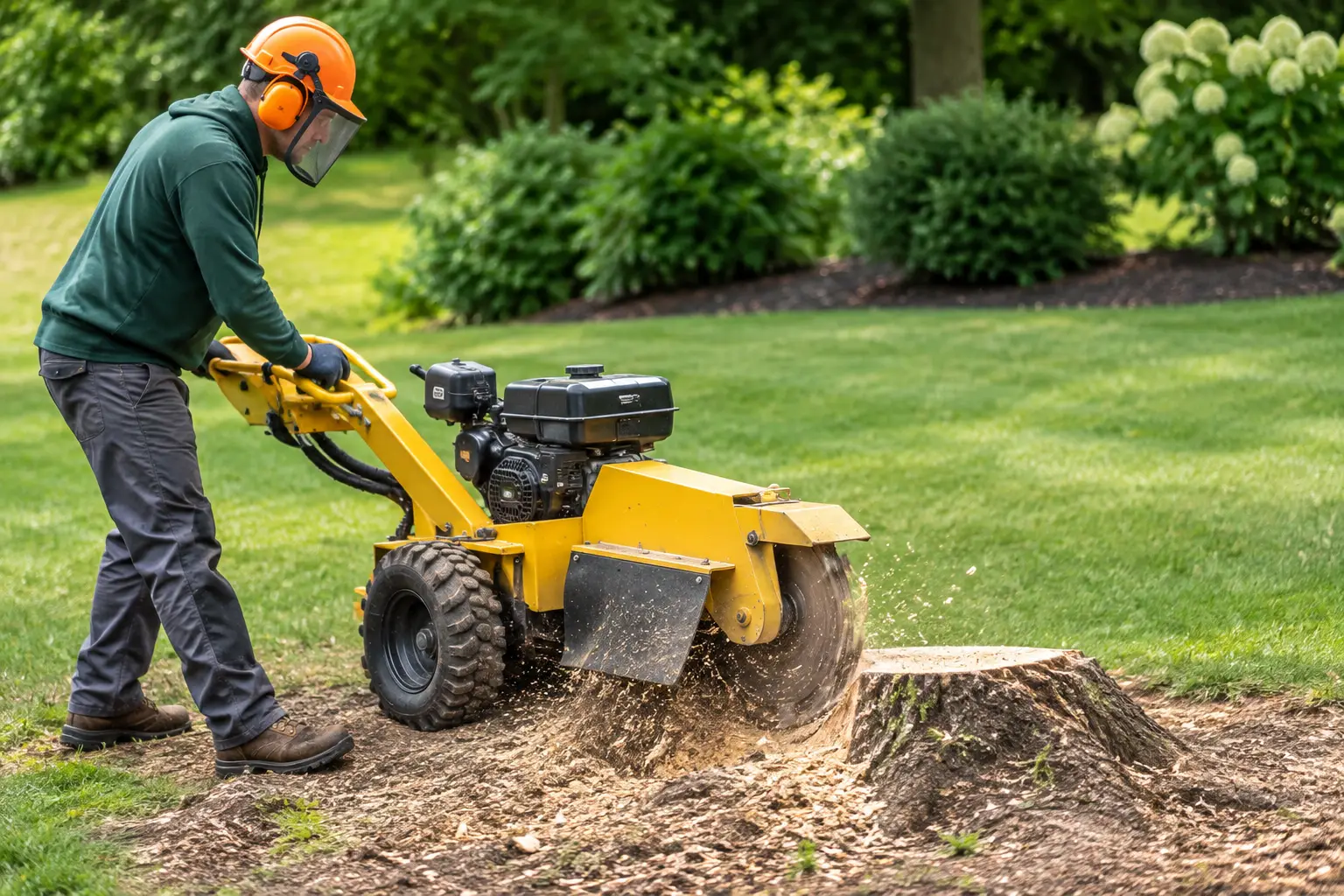
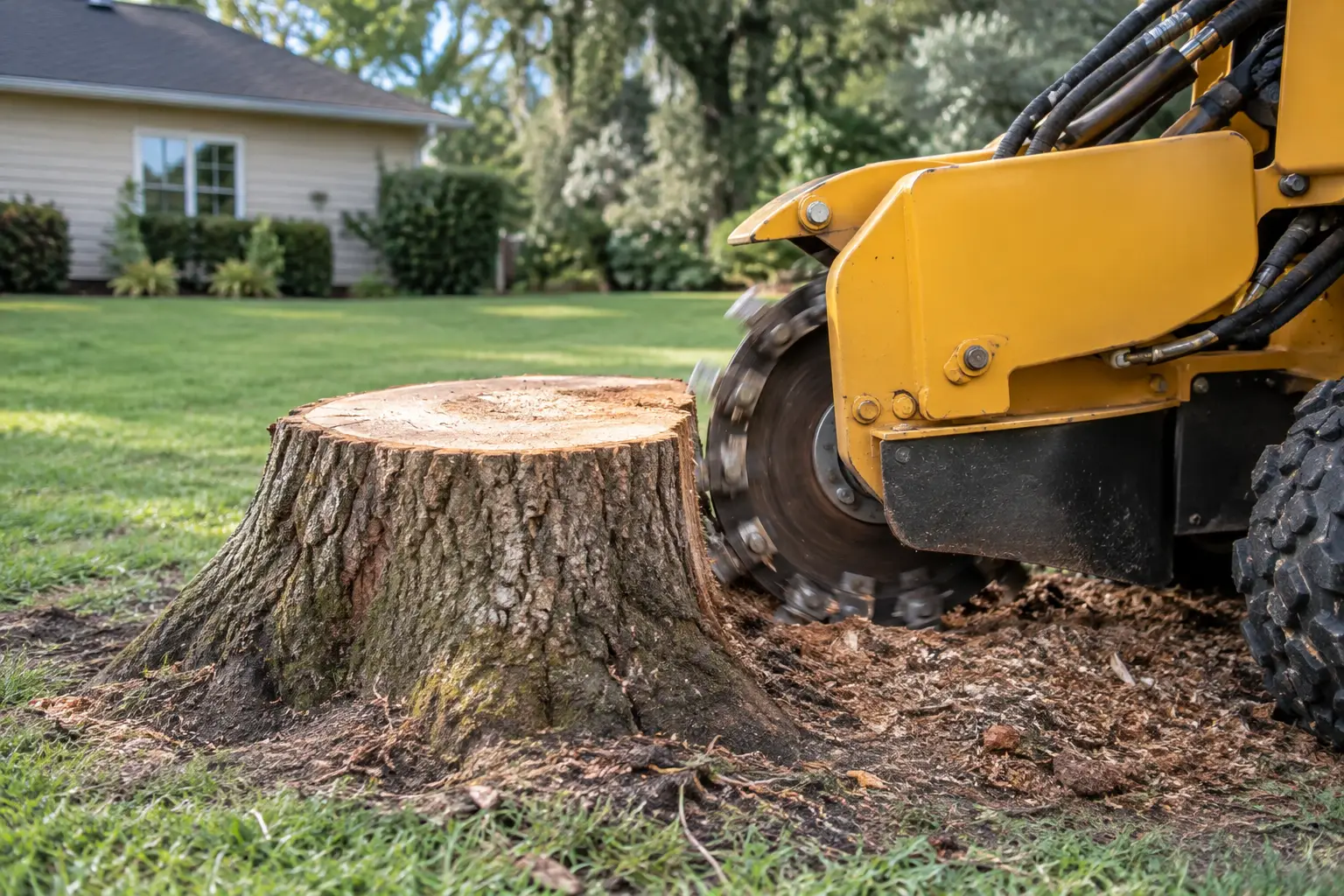
Mechanical removal generally means using a professional stump grinder. A grinder uses a rotating cutting wheel to reduce the stump and major surface roots into wood chips below ground level. The remaining area can then be backfilled with the chips, soil, or a combination of both, depending on the intended use of the site.
This is the most common choice for established residential stumps because it is efficient, controlled, and does not require excavating a large root ball. A trained crew can grind a stump down to a practical depth so the area can be covered with soil, sod, mulch, or a new landscape feature.
Mechanical removal does not always mean every root is extracted. Most roots deeper in the soil remain in place and naturally decay over time. In many yards, that is exactly what homeowners need: the visible obstacle is gone, the surface is usable again, and the surrounding lawn or landscaping can be restored without tearing up a large section of the property.
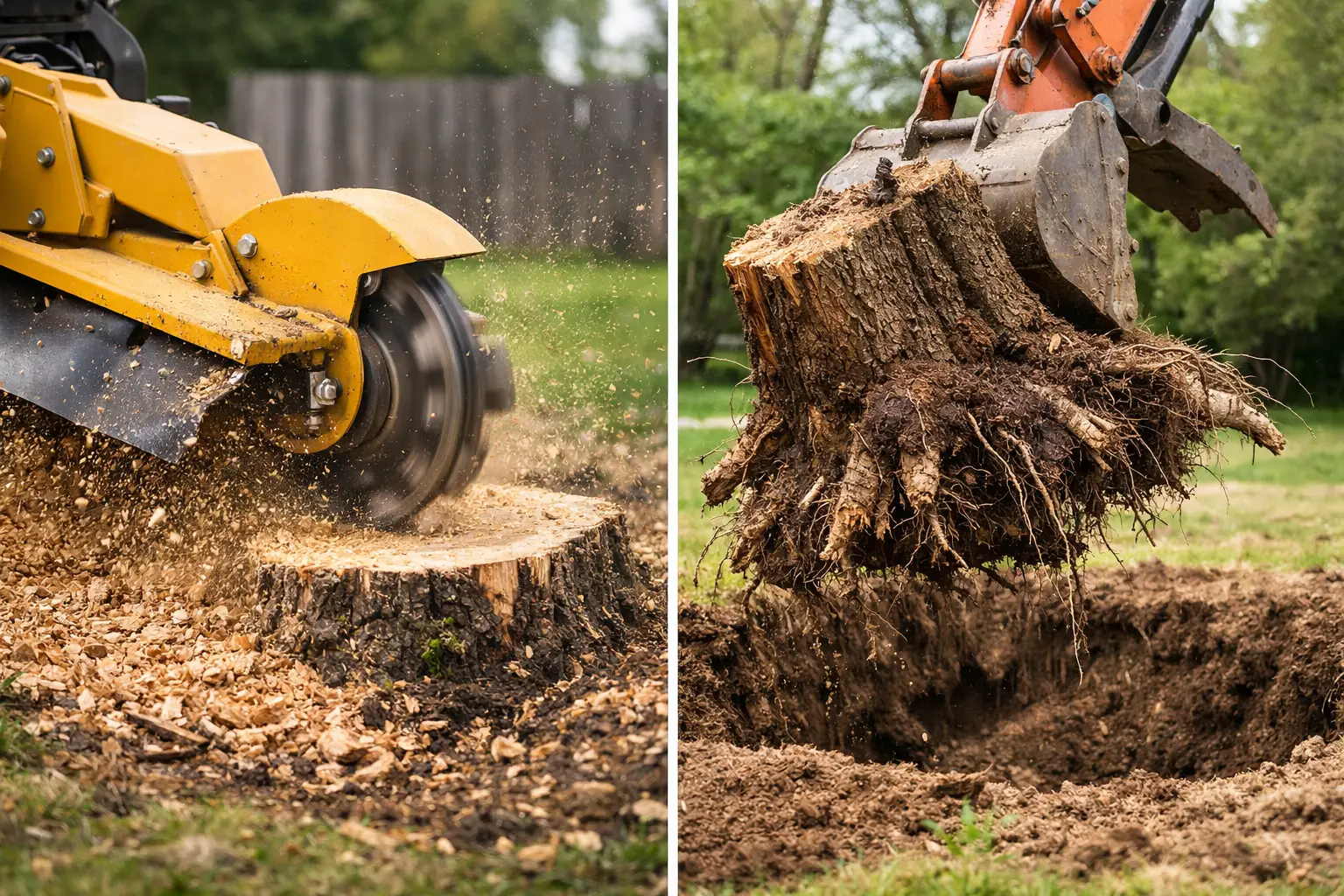
Stump grinding and full stump excavation solve different problems. Grinding is often the better option when the goal is to eliminate the stump above grade and restore the appearance and function of the yard. It is especially useful near fences, driveways, established lawns, and landscaped areas where broad digging would create unnecessary disruption.
Full excavation removes the stump and much more of its root system. It may be needed when construction is planned directly over the area, such as a new driveway, building addition, retaining feature, or pool installation. It may also be appropriate if a stump has to be removed for a specific grading or drainage project.
An on-site assessment helps determine which approach is appropriate. The right equipment and technique should protect nearby structures, utilities, trees, and landscape features, not just make the stump disappear.
The clearest difference between manual versus mechanical stump removal is effort versus efficiency. Hand removal trades equipment costs for physical labor and time. Mechanical grinding uses specialized equipment and trained operation to complete most residential jobs much faster.
Size matters. A fresh stump from a small ornamental tree may be manageable by hand. A mature oak, pine, sweetgum, or crape myrtle stump can have extensive roots and dense wood that make manual removal frustrating and risky. The larger the stump diameter, the more mechanical grinding tends to make practical and financial sense.
Location matters just as much. A stump in the middle of an open backyard gives a crew more room to position equipment and manage chips. A stump behind a narrow gate, near a pool, alongside a fence, or close to a home may require a smaller machine, protective measures, or a different removal plan. Professional equipment comes in different sizes because access is not the same on every property.
Cleanup is another important distinction. Manual work often leaves a broad excavation hole, loose roots, and heavy material that needs to be hauled away. Grinding creates wood chips, which can be removed, redistributed where appropriate, or used as part of the backfill. A complete service should leave the work area orderly and ready for the next step rather than leaving the homeowner with piles of debris.
Stump removal can seem like a simple yard project until a buried root resists cutting or a rented grinder hits uneven ground. Power tools, rotating grinder wheels, flying wood chips, hidden rocks, and underground utilities create hazards that deserve more than a quick online tutorial.
Before any digging or grinding begins, the area should be checked for utility lines, irrigation components, landscape lighting, drainage pipe, and nearby structures. Underground lines are not always where a homeowner expects them to be, particularly after additions, repairs, or landscape changes.
Trying to pull a stump with a truck or SUV is another common shortcut with serious downsides. Chains, straps, and attachment points can fail under tension. The sudden release of force can damage a vehicle, fence, or person nearby. It can also leave deep ruts in soft ground without successfully removing the stump.
Professional crews use strict safety measures, appropriate protective equipment, and equipment suited to the work. They also plan where chips will travel and how the machine will enter and leave the property with minimal impact.
Manual removal may appear less expensive because there is no service charge, but the actual cost includes tools, equipment rental, fuel, disposal, and the value of your time. If the job takes longer than expected, damages turf, or requires a professional to finish the work later, the savings can disappear quickly.
Mechanical grinding has an upfront cost, but it often delivers better value for medium and large stumps. Pricing typically depends on stump diameter, tree species, root flare, access, quantity of stumps, and whether chips need to be removed. A site-specific quote is more useful than a one-price estimate because two stumps with the same visible width can require very different levels of work.
It is also worth considering the cost of leaving a stump alone. Decaying wood can invite fungi and insects, while new shoots may emerge from some species. More immediately, an old stump can make mowing difficult and limit how you use the yard.
Choose manual removal only when the stump is truly small, the area is clear of utilities and structures, and you are prepared for hard physical work. It can be effective for the right situation, but it is not a shortcut for a large or deeply rooted stump.
Choose mechanical grinding when the stump is mature, close to important property features, difficult to access, or part of a larger cleanup project. It is often the cleaner choice for homeowners who want to reclaim lawn space without opening a large excavation area.
For projects involving planned construction, persistent drainage issues, or a stump located directly where a new structure will sit, ask whether full excavation is the better fit. A qualified tree care professional can explain the trade-offs plainly and recommend a method based on the condition of your yard rather than a one-size-fits-all answer.
Apex Tree Care approaches stump work with the same focus used for tree removal and pruning: protect the property, use the right equipment, and leave the area clean and usable. Before choosing a method, take a close look at what sits around the stump and what you want the space to become. That simple step helps ensure the removal work supports your next project instead of creating another one.

See five benefits of stump grinding, from safer yards and fewer pests to easier landscaping and a cleaner finish for your Lafayette property after re…
Compare stump grinding versus stump removal to choose the right solution for your Lafayette yard, budget, drainage, landscaping, and future plans wis…
Compare the best stump removal methods for Louisiana yards, from professional grinding to full removal, and choose the safest fit for your property t…
Tell us about your trees and we'll get back to you, usually the same day.
“They were prompt for the actual survey and gave a fair estimate. Crew showed up and did the job ahead of planned date and did an amazing job.”
Loading the quote form…
Form not showing? Open the quote form or call (337) 568-2739.
Get a free, no-obligation estimate from Lafayette's locally owned tree service.