

Storm Resilience Starts With Safer Trees
Build storm resilience with pruning, inspections, and structural tree care that helps protect your Lafayette-area home, roof, driveway, and yard, too.
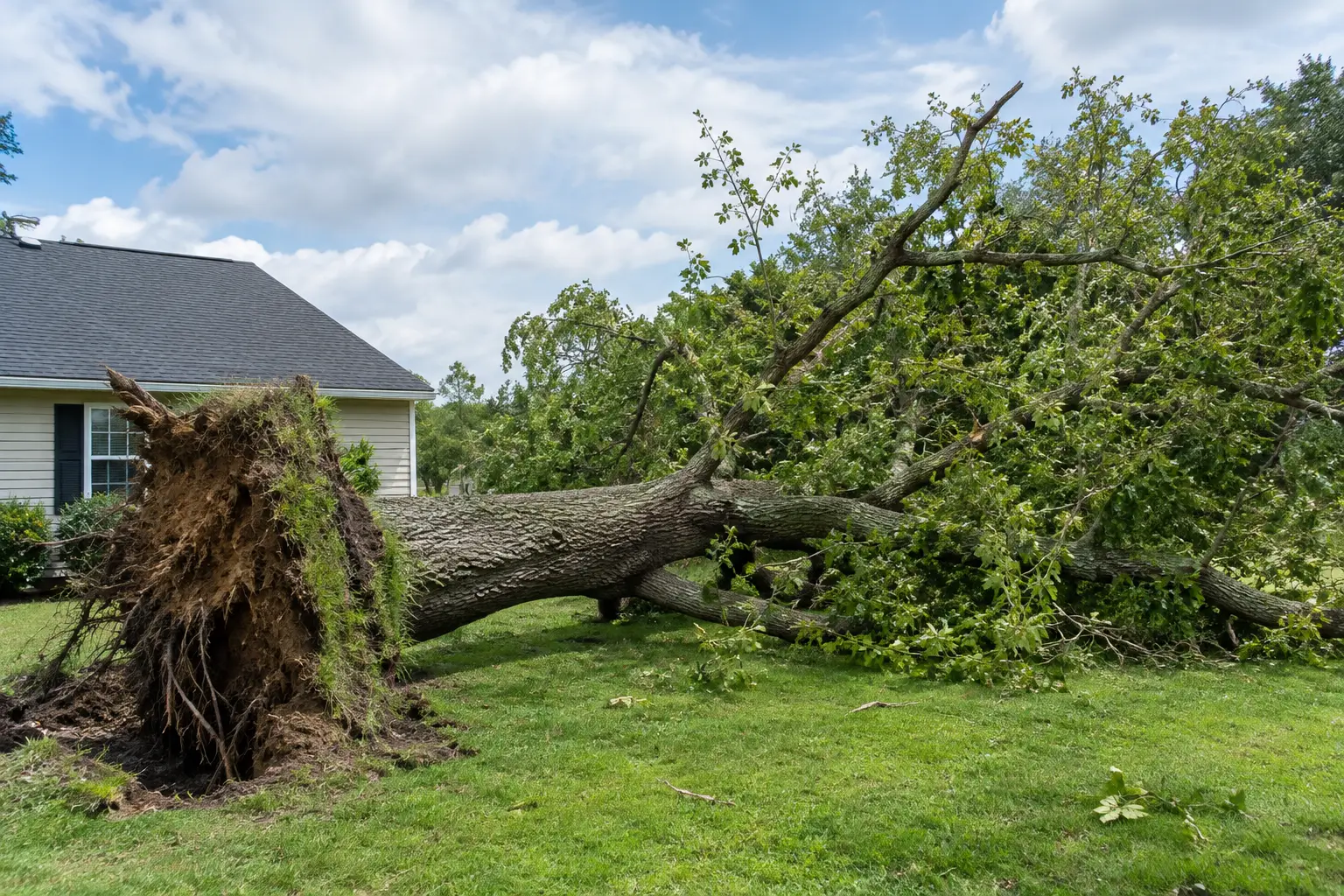
A storm oak removal example often starts with a scene homeowners in Acadiana know too well: heavy wind has pushed a mature limb onto a roofline, the yard is slick, and the remaining trunk is leaning toward the driveway. The immediate question is not whether the tree can be saved. It is whether anyone, a home, a vehicle, or a utility area is at risk right now.
For a large oak, storm cleanup is rarely as simple as cutting up what fell. Oaks are heavy, their branch unions can fail unpredictably, and storm damage may expose cracks or root problems that were not visible before the weather moved through. A professional assessment helps separate a manageable cleanup from a removal that needs careful planning, controlled lowering, and strict safety measures.
Consider a representative situation in a Lafayette-area residential yard. A mature live oak stands near the back corner of a single-family home. After a night of strong wind and saturated ground, one major limb has split from the trunk and landed across part of the patio roof. It has not punctured the roof, but it has bent a gutter and blocked access to the backyard.
The remaining portion of the limb is still attached several feet above the break. The trunk has a visible vertical crack near that attachment point, and the canopy is weighted heavily toward the house. A homeowner may see one broken limb. A trained tree crew sees several connected hazards: suspended wood, a compromised branch union, a potentially unstable trunk, roof exposure, and limited room to work around fencing and landscaping.
The first step is to establish a safe work zone. Family members, pets, vehicles, and outdoor furniture should stay clear of the tree and the area below damaged limbs. If a limb is touching a power line, has pulled down a service line, or is close enough to create an electrical concern, the utility provider must address that hazard before tree work begins. No one should attempt to pull, cut, or climb a tree near energized lines.
Next comes the site assessment. The crew examines the trunk, root flare, canopy, nearby structures, access points, and the path each piece of wood can take as it is removed. Wet Louisiana soil matters here. If the root plate has lifted, the ground is heaving around the base, or the tree is leaning more than usual, the tree may be at risk of complete failure. That changes the removal plan.
In this example, the split limb cannot be safely cut from the ground in one piece. Its weight is resting partly on the roof, and an uncontrolled cut could scrape shingles, crush the gutter further, or cause the hanging section to swing into the home. The crew may use ropes and controlled rigging to support sections before making precise cuts. Each piece is lowered into a designated landing area rather than dropped where it could damage the property.
Once the fallen limb is removed, the tree needs another close inspection. Some storm-damaged oaks can be retained with corrective pruning if the trunk and primary structure remain sound. Removing torn wood, making proper pruning cuts, reducing end weight where appropriate, and monitoring the tree can sometimes preserve a valuable shade tree.
But that is not always the responsible recommendation. In this storm oak removal example, the crack extends into the main trunk and the remaining canopy has lost its balance. Pruning alone would leave a weakened tree leaning toward the home. A cabling or bracing system can help support certain structurally weak limbs or trunks, but it is not a cure for extensive decay, a major split, or serious root failure. Structural support is considered only after the tree's condition and long-term risk have been evaluated.
Removal becomes the practical choice when the remaining structure cannot reasonably be made safe. That recommendation is about protecting the home and the people who use the property, not removing a tree simply because it looks damaged. A qualified crew should explain what they found, what options are realistic, and why one approach offers a safer outcome than another.
A mature oak near a house is removed in sections. Before work starts, the crew identifies obstacles such as roof edges, windows, HVAC units, fences, garden beds, gates, and neighboring property. They also determine where equipment can enter without damaging turf or creating unnecessary ruts.
The safest method depends on the tree's size, condition, location, and access. In some yards, a climber can dismantle the tree from the top down using ropes to lower limbs. In others, professional equipment provides a safer reach and better control. When a tree is severely compromised, workers may need to stabilize it from a distance and adjust their sequence to avoid loading a cracked trunk.
This is why storm removal estimates can vary. The size of the oak matters, but so do the failure points, distance from the house, access to the work area, debris volume, and whether pieces must be lowered by hand instead of placed in an open yard. The lowest price is not always the lowest-risk option when a damaged tree is close to a structure.
A complete storm response includes more than getting the tree on the ground. In this example, the crew removes branches and wood from the patio area, clears access routes, and gathers smaller debris that can become a mowing or tripping hazard. The work area is checked for loose hanging branches before the crew leaves.
Homeowners should ask what cleanup includes. Some people want usable firewood left in manageable lengths. Others prefer all wood hauled away. If stump removal is part of the plan, stump grinding can reduce the remaining stump below grade so the area can be restored for grass, planting, or another landscape use. It depends on the homeowner's plans for the space and the location of underground utilities, irrigation, or nearby hardscaping.
A clean job site matters after a storm because homeowners are already dealing with repairs, insurance calls, and disrupted routines. Clear communication about debris, stump options, and any areas that need temporary protection helps avoid surprises.
Do not walk beneath a hanging limb or stand close to a leaning oak to take pictures. Storm-damaged wood can shift without warning, especially as wind continues or water drains from saturated soil. Keep children and pets away from the area, and move vehicles only if doing so does not require entering the hazard zone.
Document visible damage from a safe distance for your records. Photos of the tree, affected structures, and any blocked access can be helpful when speaking with an insurance representative. If damage is active or a tree has struck the home, contact the appropriate emergency and utility resources first.
Avoid common shortcuts. Do not use a ladder against a damaged tree, pull a limb with a truck, or make a relief cut in wood that is under tension. A branch that appears still may be carrying enormous stored force. Storm tree work is one of the most dangerous jobs a homeowner can try to handle alone.
When scheduling an assessment, be ready to describe the tree's location, whether it is on a structure, whether wires are involved, and if access is blocked. This helps the crew arrive prepared and prioritize immediate hazards. Apex Tree Care provides site-specific recommendations so homeowners can understand whether they need emergency hazard removal, corrective pruning, full removal, or follow-up care for a tree that can remain.
Removing a damaged oak solves the immediate danger, but the property may still need attention. Inspect the roof, gutters, fence, patio, and nearby trees once it is safe to do so. A storm that broke one limb may have stressed other trees, especially those with deadwood, crowded canopies, or prior damage.
The open space left by a mature oak can also change sun exposure and drainage. That may affect turf, foundation plantings, and outdoor living areas. If replanting is planned, choose a species and location with the tree's mature size in mind. A new tree placed too close to the home, driveway, or utility area can create another long-term maintenance issue.
The best next step after storm damage is a calm, professional evaluation before the visible problem becomes a larger failure. A careful removal plan protects what is still standing, keeps the cleanup organized, and gives your yard a safer path back to normal.

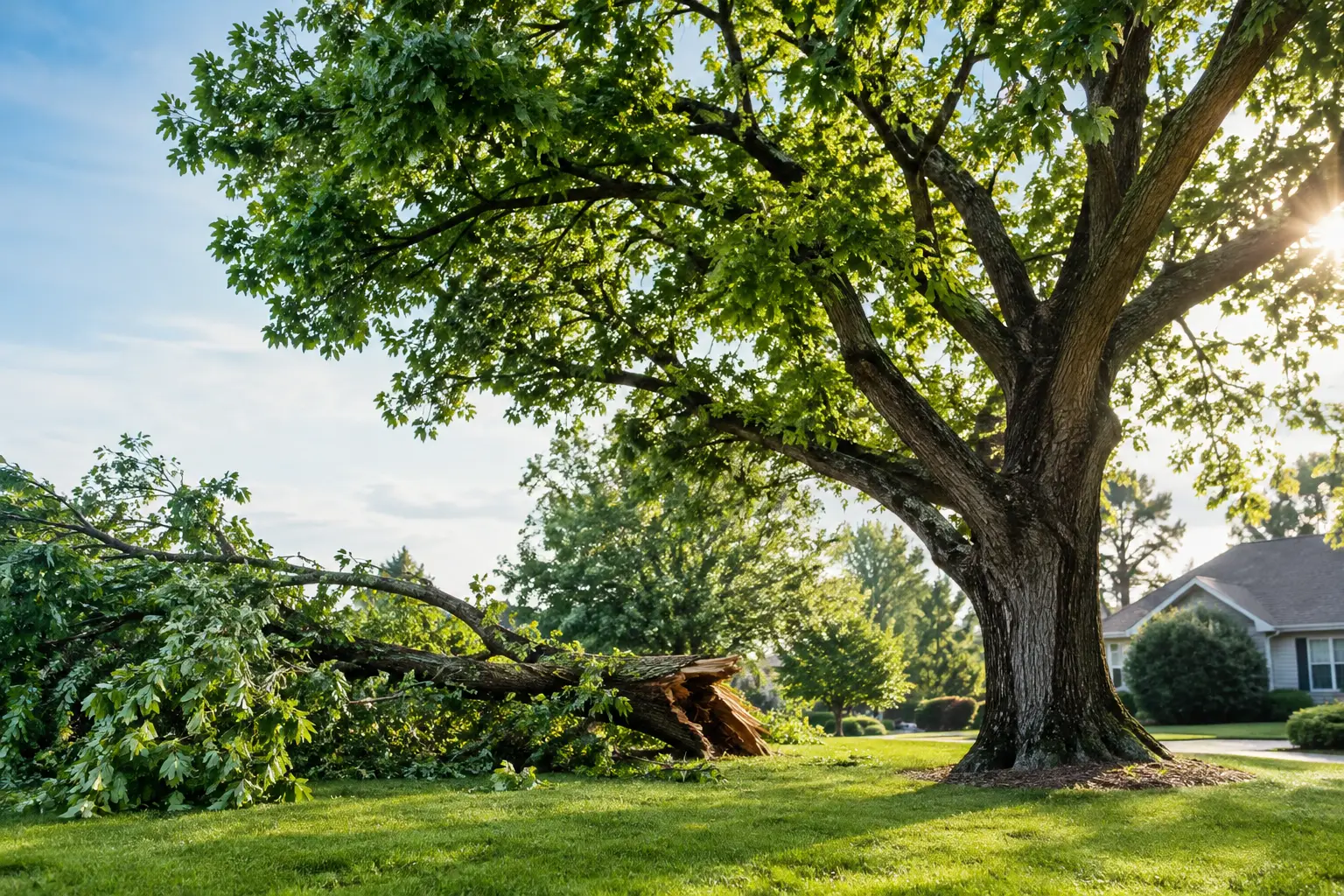
Build storm resilience with pruning, inspections, and structural tree care that helps protect your Lafayette-area home, roof, driveway, and yard, too.
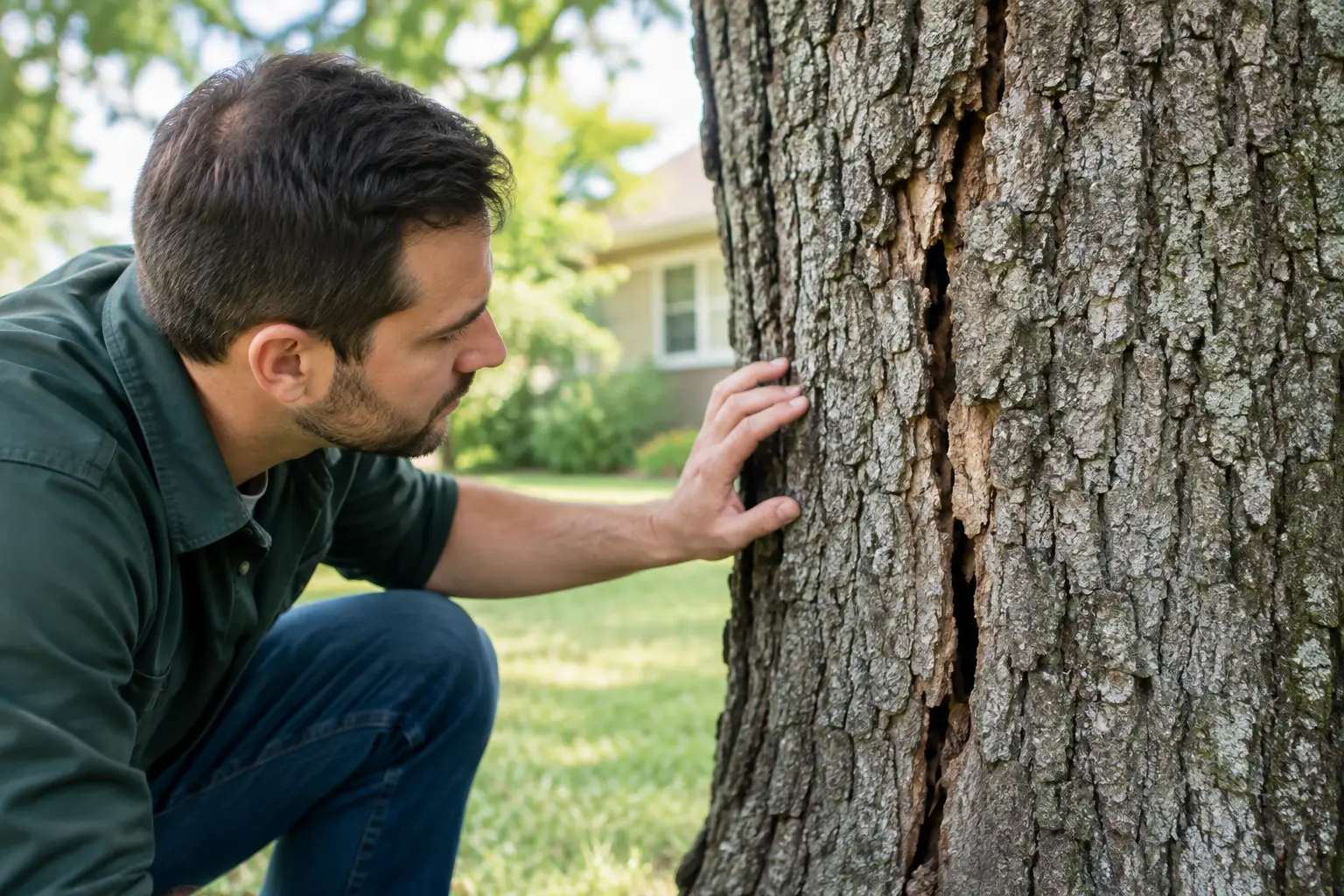
Are tree cracks dangerous? Learn which trunk splits signal a hazard, what causes them, and when Lafayette homeowners should call a nearby tree profes…

Storm damage recovery for Lafayette homeowners: assess tree hazards, protect your property, document damage, and plan safe cleanup after severe weath…
Tell us about your trees and we'll get back to you, usually the same day.
“They were prompt for the actual survey and gave a fair estimate. Crew showed up and did the job ahead of planned date and did an amazing job.”
Loading the quote form…
Form not showing? Open the quote form or call (337) 568-2739.
Get a free, no-obligation estimate from Lafayette's locally owned tree service.