
Residential Tree Risk Assessment for Safer Yards
A residential tree risk assessment helps homeowners spot hazardous trees, protect homes, and plan safe pruning, bracing, or removal before storms.
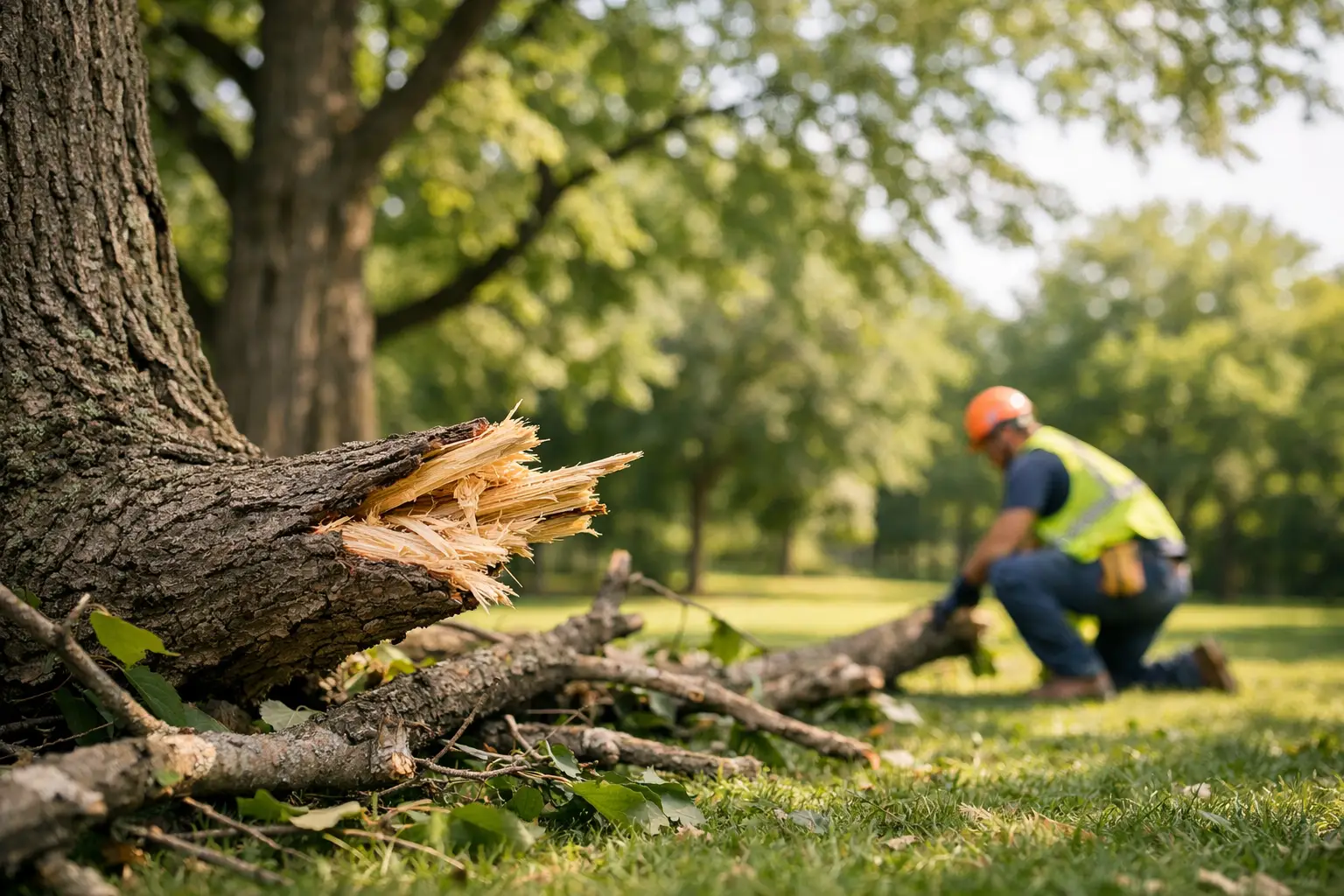
A limb can look perfectly fine from the ground, then land on a roof, fence, or driveway after one hard Louisiana storm. Understanding why trees lose branches helps homeowners separate normal tree behavior from warning signs that call for prompt professional attention. In Acadiana, heat, heavy rain, high humidity, and hurricane-season winds can turn a small structural issue into a serious property hazard quickly.
Not every fallen branch means a tree needs to come down. Trees naturally shed some limbs as they grow, compete for sunlight, and respond to changing conditions. The concern is when branch loss is frequent, sudden, unusually large, or happening near your home, outdoor living area, vehicles, or utility lines.
Branch loss usually comes down to one of three things: weather stress, declining tree health, or a structural weakness that has developed over time. Often, more than one factor is involved. A healthy-looking tree can still have hidden decay or poorly attached limbs that make it vulnerable when the wind picks up.
Strong wind does not always create the problem. It often exposes a problem that was already there. A branch with internal decay, a narrow attachment point, or excess weight may hold on through calm weather for years before a storm causes it to fail.
Rain adds weight to leaves and branches, while saturated soil can make the entire tree less stable. This is especially relevant after prolonged downpours, when wind and wet foliage put extra strain on limbs. Mature trees with broad, dense canopies can catch a great deal of wind, particularly if they have not been pruned for balance and clearance.
After a storm, look beyond the branches already on the ground. Fresh cracks, hanging limbs, torn bark, split branch unions, and a suddenly lopsided canopy may point to additional hazards overhead. Do not stand beneath damaged limbs or attempt to pull them down yourself.
Dead branches cannot flex and recover the way living wood can. As they dry out, they become brittle and increasingly likely to break. Deadwood may appear gray, bare, cracked, or stripped of bark, but it is not always obvious from the ground.
A dead limb does not necessarily mean the entire tree is dying. Trees can lose individual branches due to shading, age, past storm damage, or localized disease. Still, dead limbs over a roof, walkway, play area, or driveway should be removed safely before gravity or wind handles the job on its own.
One of the most frustrating tree hazards is hidden decay. A branch or trunk can retain leaves and look sound externally while its interior wood has softened or hollowed. Fungi growing near the base of a tree, cavities, peeling bark, old wounds, and large broken stubs can all indicate decay, though only an on-site assessment can determine how serious the issue is.
Decay does not always require removal. It depends on the tree species, the location and extent of the decay, the size of the tree, and what the tree could strike if it fails. In some cases, selective pruning, cabling, or bracing may help manage a structural concern. In others, safe removal is the more responsible option.
The point where a branch joins the trunk matters. Strong branches usually have a visible collar and a wide, well-formed connection. Weak attachments often form a tight V-shaped crotch, sometimes with bark trapped between the two stems. This is called included bark, and it prevents the wood from joining as strongly as it should.
Co-dominant stems - two main trunks growing from the same point - can also become a problem as a tree matures. They may look balanced for years, yet the union can split under wind load or the weight of heavy foliage. Proper pruning while a tree is younger can reduce these risks, but older trees may need a more specific plan based on their condition and location.
A dense canopy can be attractive, but too much interior growth can leave a tree carrying more weight and catching more wind than its structure can comfortably support. Long, heavy limbs that extend far from the trunk are particularly prone to failure, especially when they have never been reduced or properly supported.
This does not mean trees should be aggressively cut back. Topping a tree or removing too much live growth at once can create stress, encourage weak regrowth, and make future failures more likely. Precision pruning focuses on removing dead, damaged, rubbing, or poorly placed limbs while preserving the tree's natural form and long-term health.
A single small twig after windy weather is rarely an emergency. A large limb, repeated breakage, or visible structural damage deserves closer attention. Homeowners should take a cautious approach when branches are near structures or places people use every day.
Call for an assessment when you notice a hanging or partially broken limb, cracks where large branches meet the trunk, branches rubbing against the roof, decay around an old wound, or a canopy that suddenly appears thinner on one side. Other concerns include limbs growing into service lines, roots lifting around the base, and a tree that has started leaning after heavy rain or wind.
If a limb is resting on a power line, keep everyone away from the area and contact the utility provider immediately. Do not touch the branch, the line, a fence, or the ground near the affected area. Tree work around electrical hazards requires specialized planning and strict safety measures.
First, protect the area. Keep children, pets, and visitors away from the fallen limb and from the space directly below any damaged canopy. If the branch has damaged a roof, vehicle, fence, or structure, take photos from a safe distance before moving anything.
Small, accessible branches that are completely on the ground may be manageable for a homeowner, but avoid using a ladder, climbing a tree, or cutting wood under tension. A limb can shift suddenly as cuts are made, and storm-damaged branches are unpredictable. Large limbs, limbs caught in another tree, and branches near a structure are best handled by trained professionals with the right equipment.
The cleanup matters, too. Leaving broken wood and torn stubs in a canopy can invite decay and create future problems. A clean, correctly placed pruning cut helps the tree close the wound naturally and reduces the chance of unnecessary damage.
Pruning cannot make a tree storm-proof, but it can meaningfully reduce avoidable risk. The best time and approach depend on the species, age, health, season, and surrounding targets. A tree growing in an open yard may need different care than the same species growing close to a home or over a driveway.
A thoughtful pruning plan may remove deadwood, reduce the length of overextended limbs, improve canopy balance, and create clearance from roofs and structures. For trees with a valuable but structurally weak limb, cabling and bracing can sometimes provide added support. These systems are not a cure for severe decay or major instability, but they can be useful when installed and monitored as part of a broader tree-care plan.
Routine maintenance is generally less disruptive and less expensive than waiting for a large limb to fail. It also gives homeowners the chance to address small concerns before they become urgent storm-season decisions.
Some trees have reached the point where pruning is no longer enough. Extensive decay, major trunk cracks, repeated large limb failures, root damage, or a pronounced lean toward a home can make removal the safer long-term decision.
This is not a decision that should be based on appearance alone. Large tree removal requires an evaluation of the tree's condition, its drop zone, nearby structures, access for equipment, and cleanup needs. Apex Tree Care provides site-specific recommendations so property owners understand whether precision pruning, structural support, or safe and efficient removal best fits the situation.
A tree does not have to look dead to pose a risk, and a fallen branch does not always mean a tree is beyond saving. The practical next step is to have questionable limbs assessed before the next round of wind and rain gives them a chance to fail.

A residential tree risk assessment helps homeowners spot hazardous trees, protect homes, and plan safe pruning, bracing, or removal before storms.
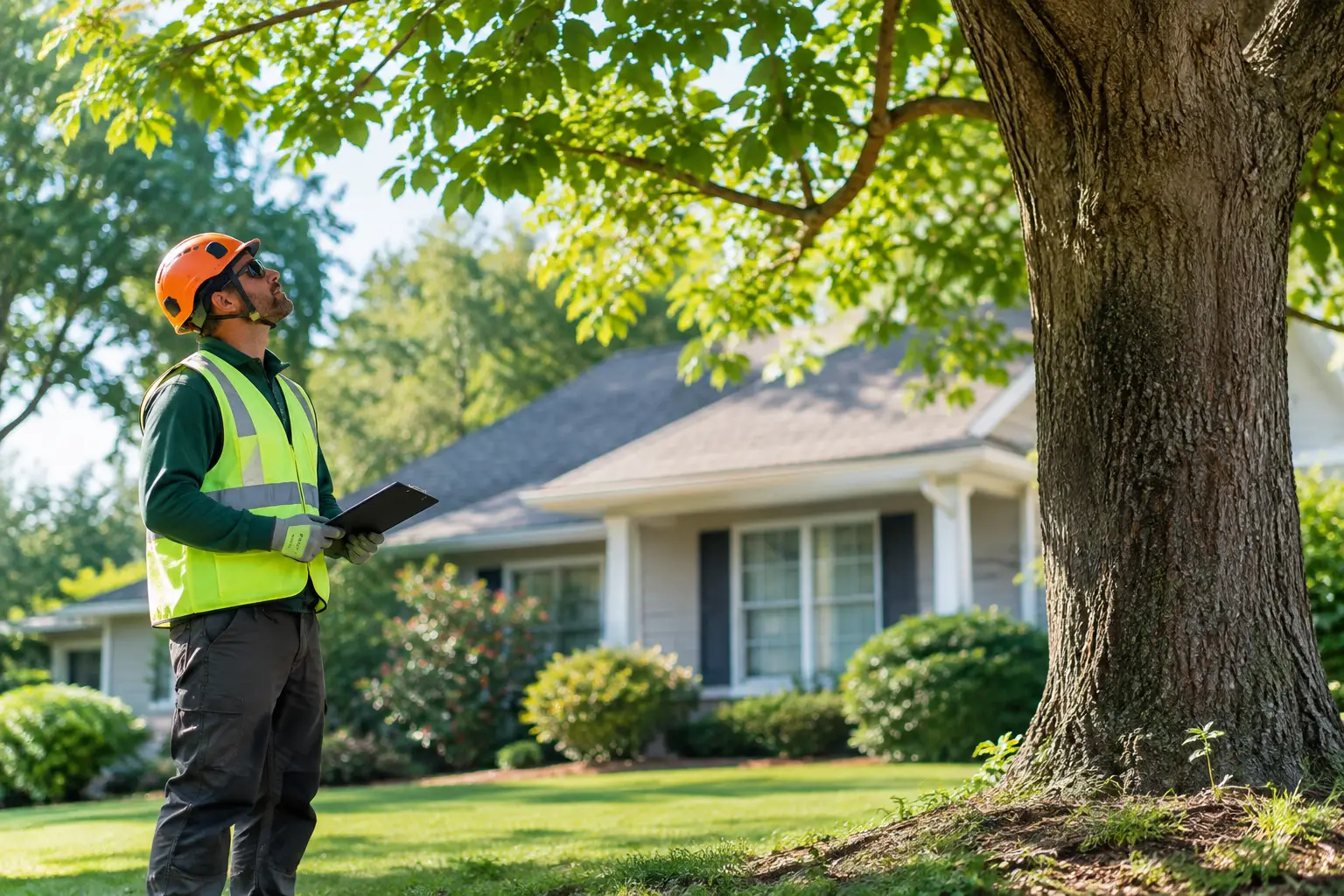
Tree safety starts with spotting hazards early. Learn when to prune, remove, or support trees to protect your Lafayette home, family, and yard safely.
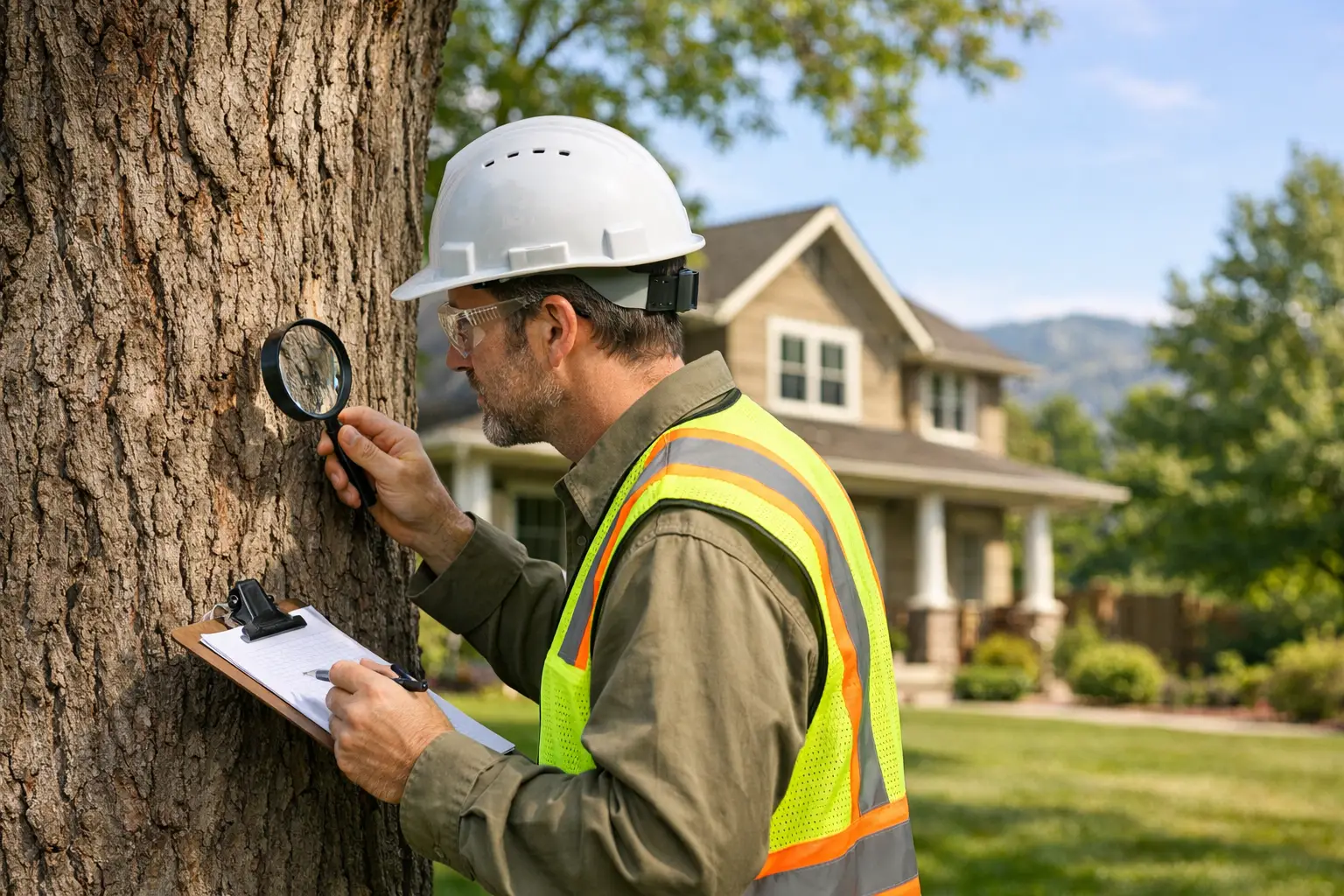
Tree inspection helps Lafayette homeowners spot hazards, protect roofs and yards, and plan safe pruning, support, or removal before problems grow wor…
Tell us about your trees and we'll get back to you, usually the same day.
“They were prompt for the actual survey and gave a fair estimate. Crew showed up and did the job ahead of planned date and did an amazing job.”
Loading the quote form…
Form not showing? Open the quote form or call (337) 568-2739.
Get a free, no-obligation estimate from Lafayette's locally owned tree service.