
A Homeowner’s Guide to Tree Crown Reduction
A practical guide to tree crown reduction for Lafayette homeowners: when it helps, what safe pruning looks like, and when to call a nearby profession…
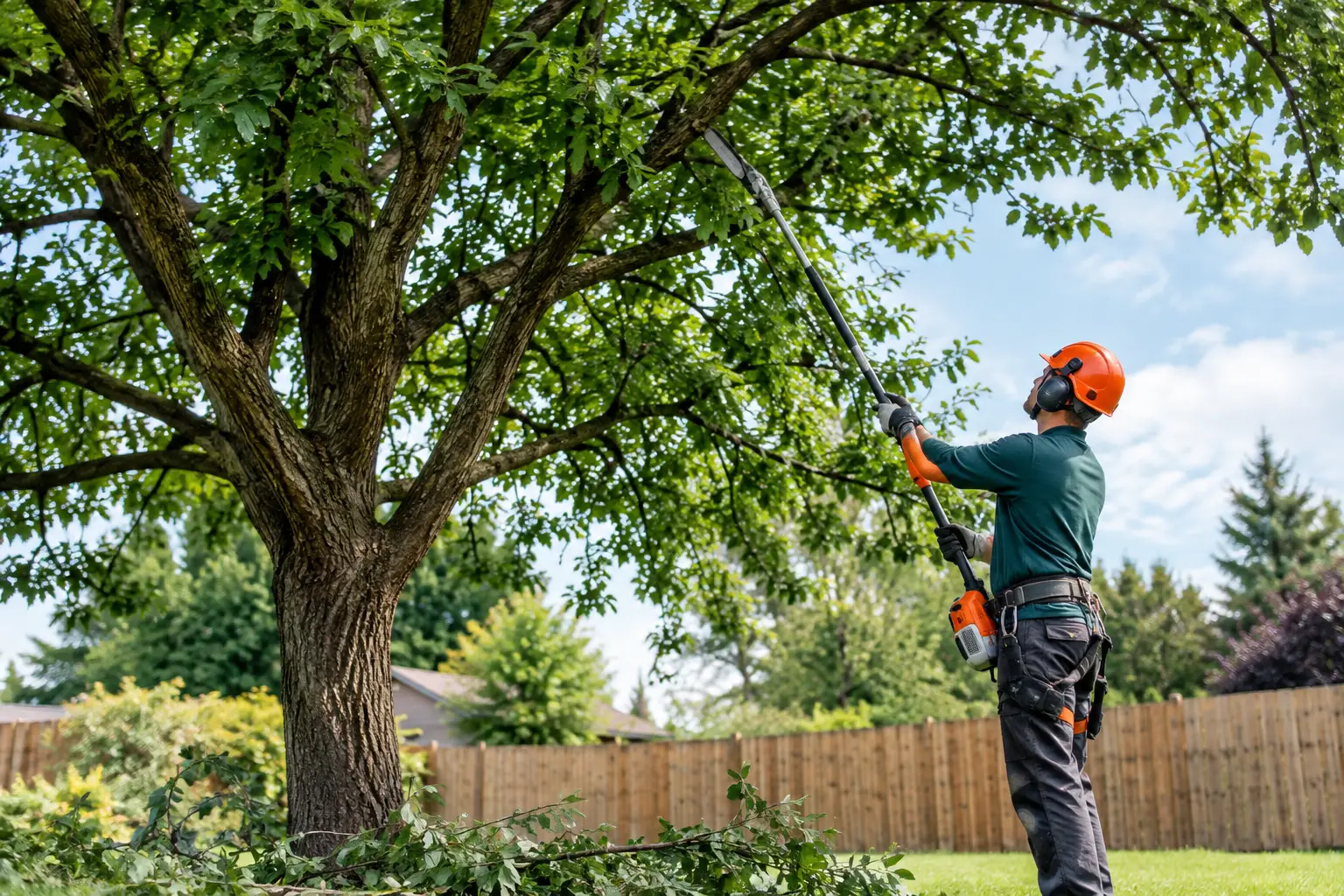
A backyard can change quickly when trees outgrow the space around them. Branches begin brushing the roof, shade takes over the lawn, limbs block a driveway, and storm winds reveal weaknesses that were easy to miss from the ground. To manage overgrown backyard trees safely, start by separating normal growth from conditions that could threaten your home, family, or landscape.
In Lafayette and across Acadiana, mature trees add real value to a property. They provide shade during long, hot summers and give a yard the established character many homeowners want. But heavy rain, saturated soil, hurricanes, and fast-growing limbs can turn an unmanaged tree into a costly problem. The right answer is not always removal. Often, precision pruning, structural support, or a planned maintenance schedule can bring a tree back under control while preserving its health.
Before cutting anything, walk the property and look at each tree from several angles. Focus on what is changing, not simply what looks large. A broad, healthy canopy may need selective trimming, while a smaller tree with a split trunk may require immediate professional attention.
Look for dead branches, hanging limbs, cracks where major limbs join the trunk, mushrooms near the base, peeling bark, cavities, and roots lifting from the ground. Also note whether branches are growing over your roof, fence, driveway, pool, outdoor kitchen, or utility area. A tree leaning toward a target is not automatically dangerous, but a new lean, exposed roots, or disturbed soil around its base can signal instability.
The most urgent concerns are trees with broken limbs overhead, visible trunk splits, large dead sections, or roots affected by construction, erosion, or recent storms. Keep people, vehicles, and outdoor furniture away from the area until it can be evaluated. A limb that looks secure from below can carry far more weight than expected.
Overgrowth alone does not mean a tree should come down. Healthy trees usually respond well to planned pruning when the goal is to clear structures, improve light and airflow, reduce limb weight, or restore a more balanced shape. Proper pruning removes selected branches while keeping enough live canopy for the tree to produce energy and recover.
Removal becomes the practical choice when a tree is dead, severely declining, structurally unsound, or planted too close to a house or utility area for safe long-term growth. It can also make sense when repeated limb failures have damaged a roof, fence, or neighboring landscape. The trade-off is straightforward: removal eliminates a continuing hazard, but it also removes shade, privacy, and the visual benefit of a mature tree. Planting a better-suited replacement in a safer location can help restore those benefits over time.
For a tree with one weak union or a heavy limb extending over a valuable target, cabling and bracing may be an option. These systems are not a substitute for pruning or removal in every situation, but they can provide supplemental support for certain structurally weak limbs and trunks. An arborist should determine whether the tree is a good candidate and whether the support can be maintained properly.
Topping means cutting major branches back to stubs or cutting off the upper portion of a tree to make it shorter. It may appear to solve an overgrowth problem immediately, but it often creates a larger one. Topped trees can respond with dense, weakly attached shoots, increased stress, decay at large cuts, and an unnatural shape.
A better approach is reduction pruning. This method shortens selected branches back to suitable lateral limbs, reducing reach and weight without stripping the tree of its structure. The work requires judgment about branch size, cut placement, and how much foliage can be removed at one time. A quick cut in the wrong place can leave a permanent weak point.
When trees crowd a house, start with the locations where a falling limb or persistent rubbing can cause damage. Rooflines, gutters, chimneys, siding, screened patios, and windows deserve attention first. Branches that contact the roof can scrape shingles, hold moisture against the structure, and give pests an easier route toward the home.
Clearance needs vary by tree species, branch size, and how much the canopy moves in wind. There is no one-size-fits-all distance, but branches should not be allowed to repeatedly rub against a structure. A trained crew can make targeted cuts that create room without hollowing out the entire canopy.
Do not forget driveway and walkway clearance. Low branches can obstruct visibility, strike tall vehicles, and create an unpleasant path for guests. In a busy residential yard, pruning for access can make the property feel more open without sacrificing the shade that makes Louisiana summers more manageable.
Any branch near a power line deserves extra caution. Homeowners should never climb, cut, pull, or use a pole saw around electrical lines. Electricity can travel through branches, tools, ladders, and the ground, even if the line does not appear damaged.
If branches are close to service lines or power infrastructure, contact the appropriate utility provider or arrange a professional assessment. The method for managing a tree near a utility corridor is different from routine backyard pruning. Strict safety measures, proper equipment, and a clear understanding of safe work zones are essential.
Weather matters when managing large trees. Extended rain can soften soil and reduce root stability, especially around trees with shallow or compromised root systems. High winds can turn a heavy, overextended limb into an emergency. After a storm, resist the urge to begin cutting while branches are still hung up, tangled, or under tension.
Instead, document visible damage from a safe location and identify what changed: a new lean, a split limb, cracked trunk, lifted roots, or branches on the roof. Emergency work may be needed when the tree threatens people or structures. Less urgent cleanup can be scheduled after a professional determines which limbs can be safely removed and which trees may recover.
Routine pruning is often easiest to schedule before a problem becomes urgent. Regular inspections also give homeowners time to budget for work and make thoughtful decisions rather than reacting after a limb fails.
Small, reachable branches may be manageable for a confident homeowner using appropriate hand tools and protective gear. Once a job requires a ladder, chainsaw, climbing, rigging, or work near a roof, it is time to call a tree care professional. Ladders and chainsaws are a particularly dangerous combination, and falling branches rarely move in the direction people expect.
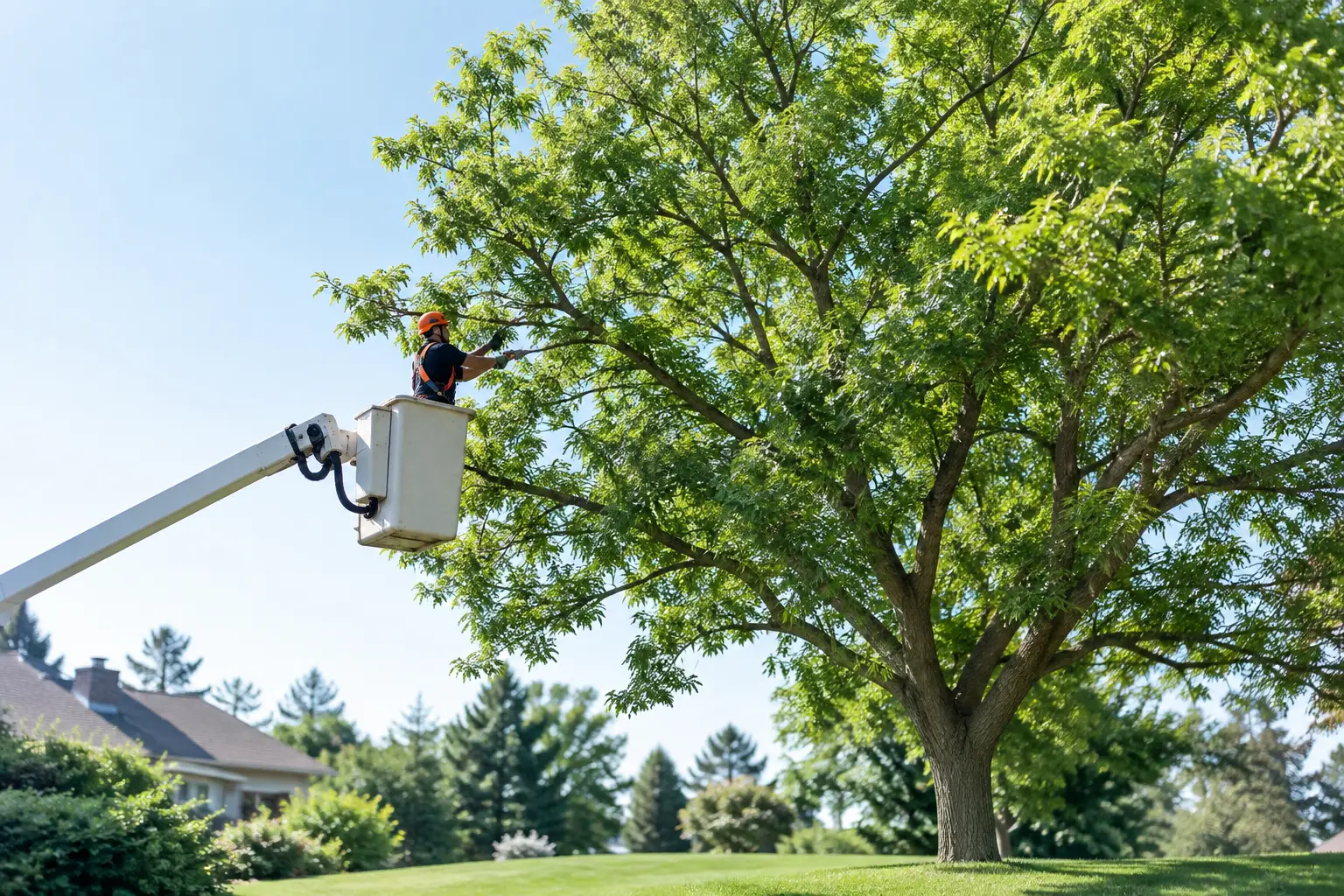
Professional crews assess where a limb can fall, how its weight will shift during a cut, and whether nearby structures require controlled lowering. They also have the equipment to handle debris and leave the yard usable when the work is complete. That cleanup matters. Piles of limbs can block access, damage grass, attract pests, and create a lingering task after the main job is done.
The best way to manage overgrown backyard trees is to prevent them from reaching a crisis point. Young trees benefit from early structural pruning that encourages sound branch spacing and a strong central form. Mature trees benefit from periodic inspection, selective pruning, and prompt attention when disease, decay, or storm damage appears.
The right interval depends on species, age, location, past pruning, and exposure to wind. A fast-growing tree next to a home may need more frequent attention than a slow-growing shade tree in an open part of the yard. Avoid treating every tree on the same schedule. A site-specific plan protects the trees that are worth preserving while identifying those that have become a long-term risk.
Apex Tree Care helps homeowners throughout Lafayette and nearby Acadiana communities evaluate overgrown trees, perform precision pruning, remove hazardous trees, grind stumps, and clear debris after the job. A professional on-site assessment gives you a clearer answer than guessing from the ground.
A tree does not have to be failing to deserve attention. Addressing crowding, low limbs, and early structural concerns now can protect your home, preserve the trees you value, and keep your backyard ready to enjoy when the next storm rolls through.
A practical guide to tree crown reduction for Lafayette homeowners: when it helps, what safe pruning looks like, and when to call a nearby profession…

See how crown thinning versus topping affects tree health, storm safety, and property risk - and why skilled pruning protects Louisiana and nearby ho…
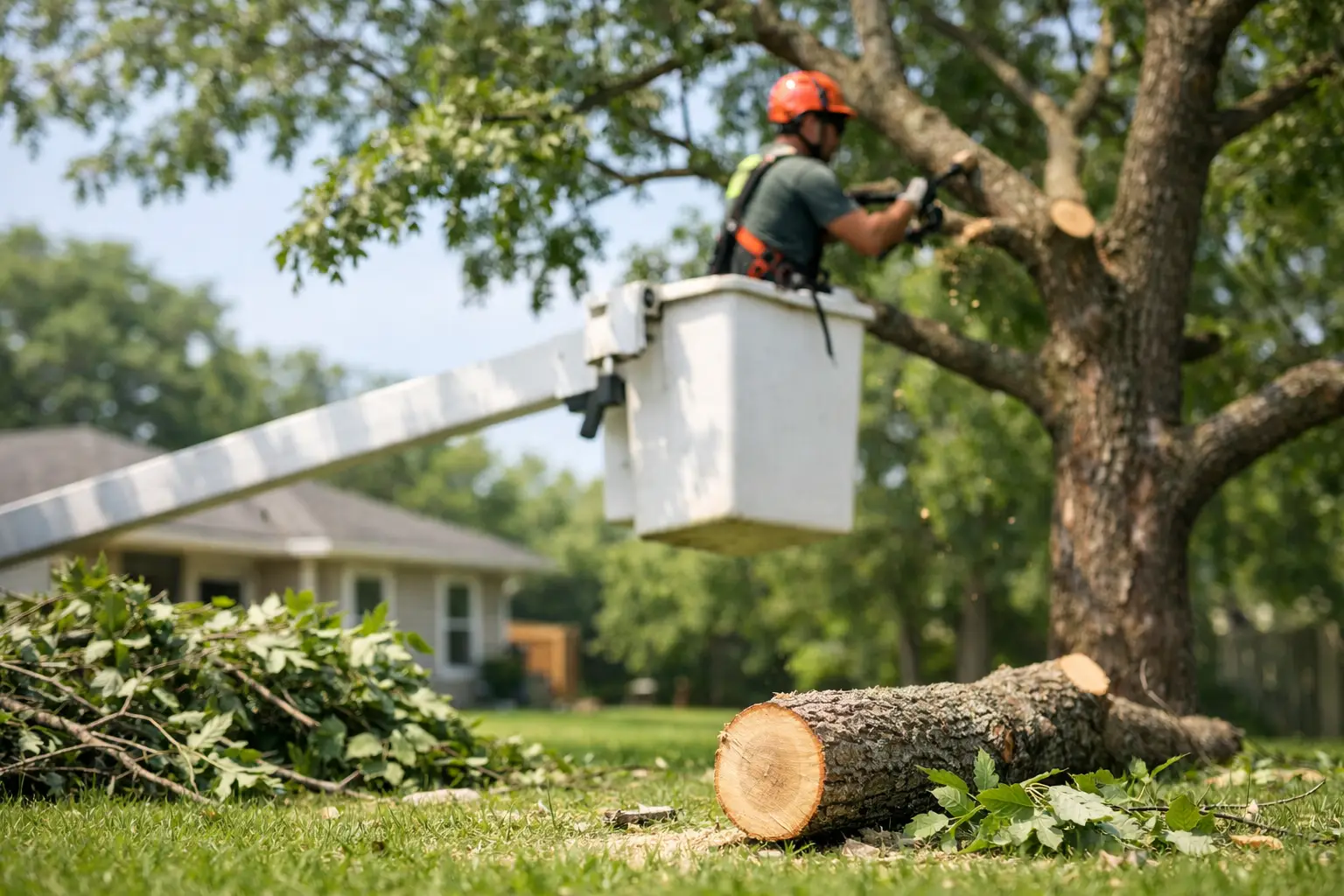
Tree pruning Lafayette LA homeowners can trust for healthier growth, clear roofs, safer yards, and clean results from a skilled local crew and cleanu…
Tell us about your trees and we'll get back to you, usually the same day.
“They were prompt for the actual survey and gave a fair estimate. Crew showed up and did the job ahead of planned date and did an amazing job.”
Loading the quote form…
Form not showing? Open the quote form or call (337) 568-2739.
Get a free, no-obligation estimate from Lafayette's locally owned tree service.