Crown Thinning Versus Topping: Which Is Safer?
See how crown thinning versus topping affects tree health, storm safety, and property risk - and why skilled pruning protects Louisiana and nearby ho…
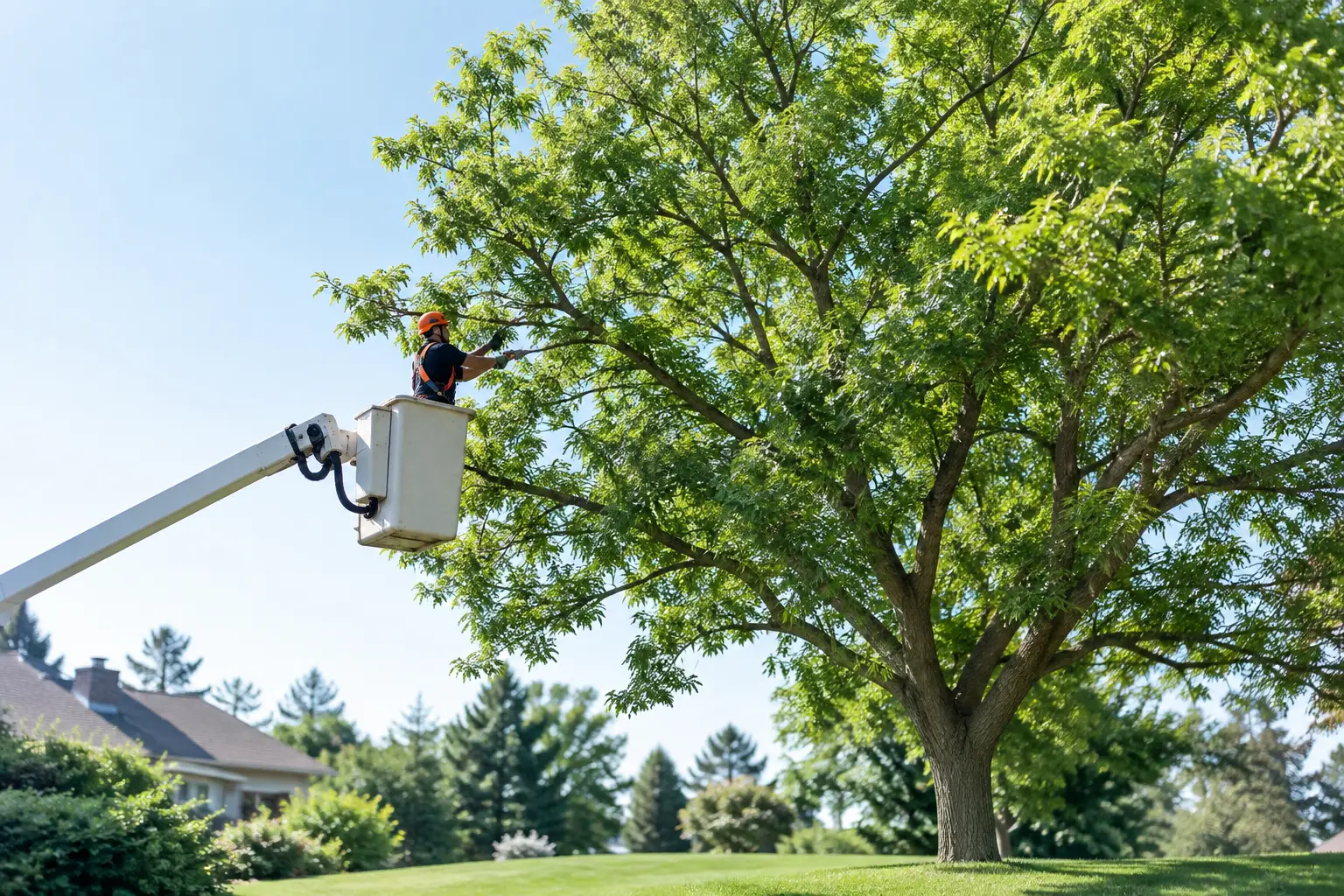
A mature live oak can add shade, curb appeal, and real value to a Lafayette property. But when its canopy begins extending over a roof, driveway, fence, or utility area, more growth is not always better. This guide to tree crown reduction explains how professional pruning can reduce risk and manage size without sacrificing the health, natural form, or long-term stability of a valuable tree.
Crown reduction is not a shortcut for making a tree smaller. Done correctly, it is a selective pruning method that shortens carefully chosen branches back to suitable lateral limbs. The goal is to reduce the overall spread or height of the canopy while keeping enough healthy foliage for the tree to produce energy and recover well.
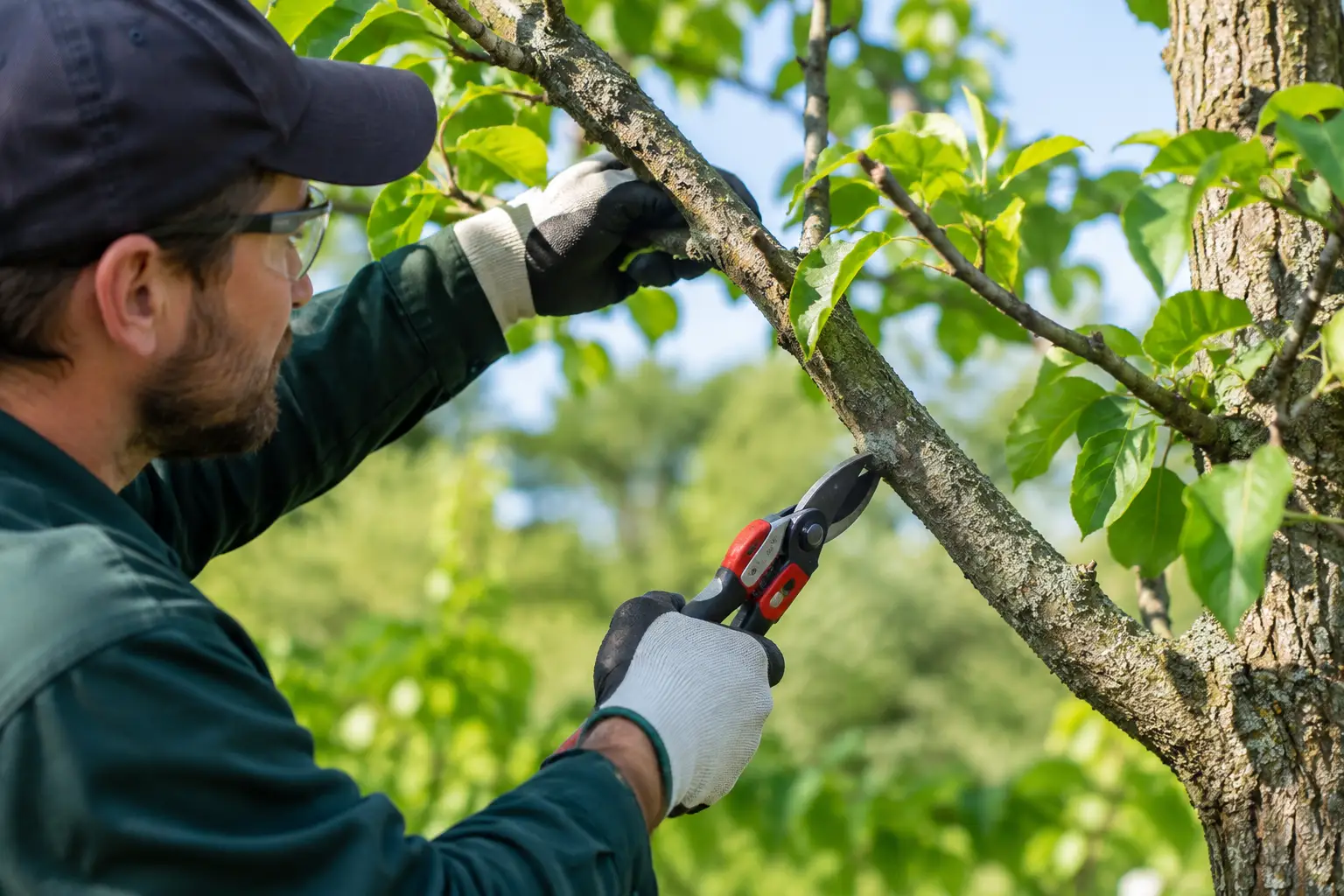
A crown reduction removes length from selected branches, usually where a smaller, healthy side branch can take over as the new growing point. Rather than leaving blunt stubs, a trained crew makes pruning cuts at natural branch unions. That detail matters because proper cuts are less stressful for the tree and help preserve a balanced canopy.
Homeowners often request crown reduction for a tree that has grown too close to the house, is reaching over a parking area, or has long limbs that move heavily in strong winds. In Acadiana, frequent rain, humid conditions, and seasonal storms can add weight to dense foliage and expose weak branch structure. Reducing leverage on an overextended limb may lower the chance of failure, especially when combined with removal of deadwood or a cabling and bracing system where appropriate.
The result should still look like the same tree, just with a more controlled, balanced canopy. If a tree looks abruptly flat-topped, stripped bare, or cut back to large branch stubs, it has likely been topped rather than properly reduced.
The difference between reduction pruning and topping is one of the most important things a property owner can understand.
Topping means cutting large branches or the main stem at an arbitrary point, often leaving stubs with no suitable side branches. It can make a tree look smaller immediately, but it also removes a large amount of food-producing foliage and can trigger weak, fast-growing shoots. Those shoots commonly attach poorly to the remaining wood, creating future maintenance and safety concerns.
Crown reduction is more precise. A qualified arborist identifies healthy lateral branches that are large enough to assume the role of the removed branch section. The canopy is reduced gradually, with attention to branch structure, species, condition, and the tree’s location on the property.
There is a trade-off. Crown reduction takes more planning and skilled labor than a quick cutback, and it may not create the dramatic size change some homeowners expect in one visit. That restraint is usually a benefit. Severe pruning can create more problems than it solves, while a measured reduction can help preserve a mature tree for years.
Crown reduction is often a good option when the tree is fundamentally healthy but has outgrown its available space. A few common situations include a canopy pressing toward a roof, long limbs extending over a pool or outdoor living space, or a tree that needs less wind resistance after storm damage.
It can also help manage a limb with excessive end weight. When branches grow long and heavy beyond their strongest supporting structure, shortening them back to appropriate laterals can reduce mechanical stress. This is particularly useful on mature shade trees with limbs over driveways, patios, and other high-use areas.
Not every overgrown tree is a candidate. If a tree has extensive decay, a hollow trunk, major root damage, severe disease, or poor structural unions, pruning may not make it safe enough to retain. In those cases, removal may be the more responsible recommendation. A site-specific assessment helps separate a manageable pruning issue from a serious structural hazard.
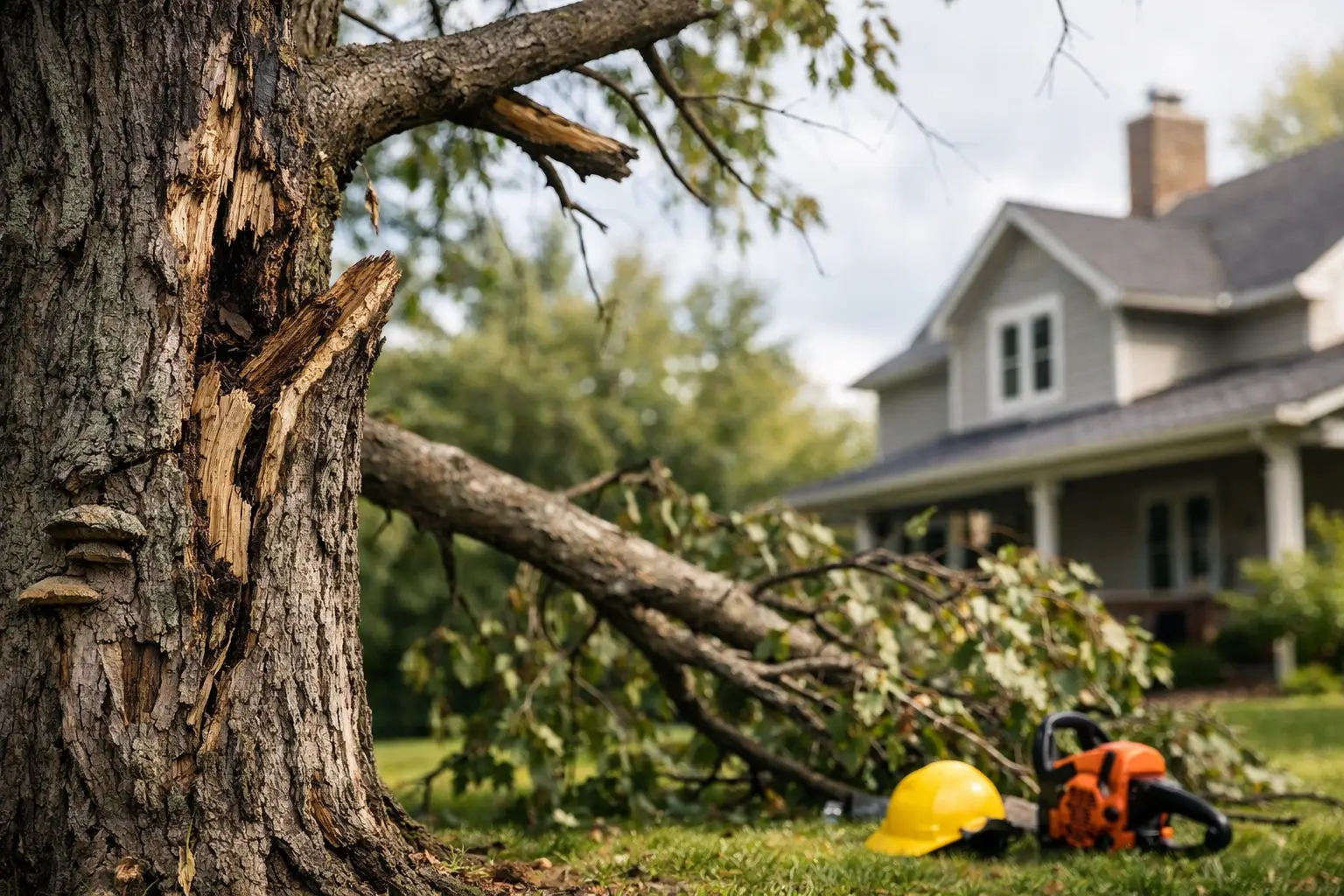
Look for limbs rubbing against the roof, hanging over service lines, touching structures, or swaying excessively in moderate wind. Other warning signs include visible cracks, dead branches in the canopy, peeling bark around branch unions, mushrooms near the base, or a noticeable lean that has changed recently.
After a storm, avoid assuming that a branch is safe because it remains attached. Partially broken limbs can be under tension and may fall without warning. Keep people and vehicles out of the area until a tree professional can inspect the damage.
A safe crown reduction starts on the ground, not with a saw in the tree. The crew evaluates the tree’s species, size, age, health, root zone, branch structure, nearby targets, access, and the amount of reduction needed. A young tree near a roof may need formative pruning. A large, mature tree with established structural weaknesses may need a more conservative plan, support hardware, or removal.
The pruning plan should prioritize dead, damaged, diseased, and crossing branches before reducing healthy growth. From there, cuts are selected to preserve the tree’s natural shape and distribute remaining weight across the canopy. Work is often completed in stages rather than aggressively removing too much at once.
Professional crews also consider what is below the tree. A branch over an open lawn is different from one over a roof, glass window, gate, power line, or neighbor’s fence. Rigging, controlled lowering, proper personal protective equipment, and clear work zones are part of safe execution. For trees near energized utility lines, homeowners should never attempt pruning themselves. Specialized clearance procedures and coordination may be required.
At Apex Tree Care, the process includes an on-site look at the specific tree and surrounding property, followed by a practical recommendation based on safety and long-term tree health. The work should end with thorough debris cleanup, so the yard is usable when the crew leaves.
The best time to prune depends on the tree species, its health, and the reason for the work. Many trees respond well to pruning during their dormant period, when disease pressure and active growth may be lower. However, hazardous branches, storm damage, and limbs threatening a structure should be addressed promptly regardless of season.
In Lafayette and nearby communities, heavy rain and storm season add another consideration. Pruning cannot guarantee that a tree will withstand every storm, but removing deadwood and reducing excessive end weight before severe weather can lower avoidable risks. Waiting until a limb breaks over a roof or driveway usually means a more urgent, more complicated job.
Avoid scheduling major pruning simply because a tree looks full. Healthy, mature trees need their leaf canopy. If the concern is shade, falling leaves, or a few low branches, selective thinning or clearance pruning may be more appropriate than crown reduction.
Do not climb a tree with a chainsaw, cut limbs over a roof, or use a ladder to reach high branches. Even a branch that appears small can shift unexpectedly, pull a ladder sideways, or strike a person as it falls. The risk increases around wet ground, overhead lines, decayed wood, and trees that have already been stressed by wind.
It is also wise to avoid asking for a fixed percentage of the canopy to be removed before the tree is inspected. A safe amount varies widely. Species, branch size, decay, prior pruning, and the tree’s ability to recover all affect what is reasonable. The better question is: what pruning will solve the property concern while preserving as much healthy structure as possible?
A properly pruned tree usually needs simple aftercare. Keep mulch away from the trunk, water during prolonged dry periods if the tree is young or stressed, and avoid damaging roots with excavation, soil compaction, or repeated vehicle traffic. Do not apply wound paint to pruning cuts. Trees naturally compartmentalize wounds, and the focus should be on making correct cuts in the first place.
Watch the tree over the following months. Some new growth is normal, but rapid shoots from large topping cuts are a sign that the tree was stressed or improperly pruned. Periodic inspections are especially helpful for large trees near a home, since growth, storms, and hidden decay can change the risk over time.
A well-planned crown reduction is about keeping a tree useful, healthy, and safer in the space it occupies. When branches begin competing with your roofline, driveway, or outdoor living area, an early professional assessment gives you more options than waiting for the next storm to make the decision for you.

See how crown thinning versus topping affects tree health, storm safety, and property risk - and why skilled pruning protects Louisiana and nearby ho…
Learn the signs of a hazardous tree, what raises risk in Louisiana weather, and when to call a professional for a safe property assessment near you n…
Can pruning stop disease in your trees? Learn when precision pruning helps, when it can spread infection, and when Lafayette homeowners need expert c…
Tell us about your trees and we'll get back to you, usually the same day.
“They were prompt for the actual survey and gave a fair estimate. Crew showed up and did the job ahead of planned date and did an amazing job.”
Loading the quote form…
Form not showing? Open the quote form or call (337) 568-2739.
Get a free, no-obligation estimate from Lafayette's locally owned tree service.