

A Homeowner’s Guide to Tree Crown Reduction
A practical guide to tree crown reduction for Lafayette homeowners: when it helps, what safe pruning looks like, and when to call a nearby profession…
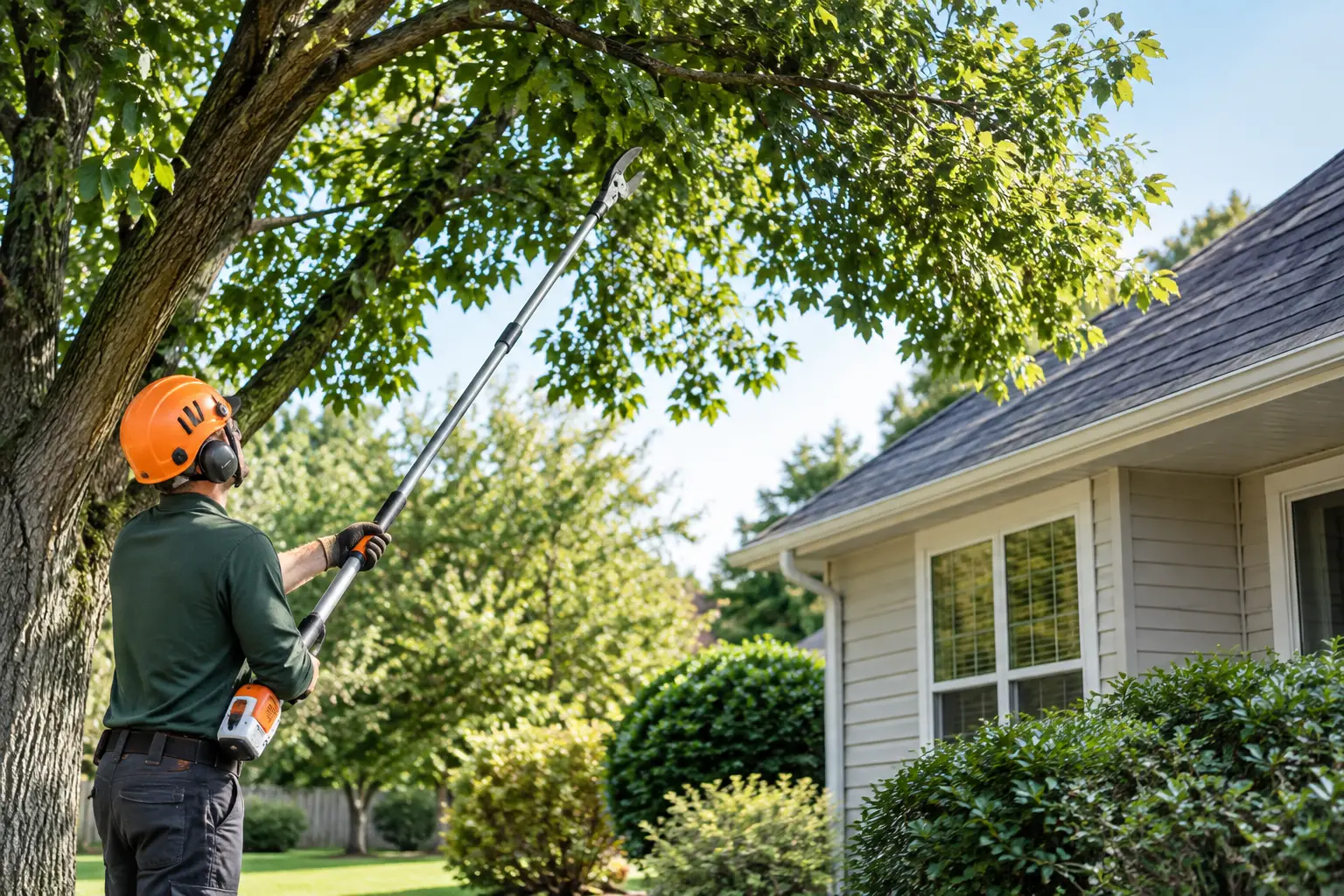
A branch brushing the roof during a hard Lafayette rain is more than an annoyance. It can wear down shingles, block gutters, give squirrels a route into the attic, and become a serious breakage risk when wind picks up. Knowing how to improve tree clearance helps protect your home while preserving the shade, privacy, and character that healthy mature trees bring to a Louisiana yard.
Tree clearance is not simply about cutting every branch back. Good clearance work considers the tree’s structure, its species, where it sits on the property, and what needs protection below it. The goal is a safer, cleaner, more usable yard without leaving the tree weak, lopsided, or vulnerable to disease.
Walk your property and look up before deciding what needs to be cut. The highest-priority areas are usually your roof, chimney, gutters, driveway, walkways, fence lines, outdoor living areas, and utility service lines. Pay special attention after a storm, when a formerly sound-looking limb may be hanging, cracked, or rubbing against a structure.
Roof clearance deserves prompt attention. Branches that rest on shingles can scrape away protective granules and hold moisture against the roof. Leaves, twigs, and seed pods also collect in gutters, reducing drainage when heavy rain arrives. A clear buffer allows air and sunlight to reach the roof and makes it easier to spot damage early.
Driveways and walkways need room for people, vehicles, delivery trucks, and lawn equipment. Low limbs can obstruct visibility when backing out, while dead branches above a path create a direct safety concern. Clearance near patios, pools, and play spaces should account for where people actually gather, not just where the branch ends today.
Utility areas require more caution. Never attempt to prune limbs near energized power lines yourself. Contact the utility provider for lines on their side of the service connection, and use a qualified tree-care professional for work that can be safely performed around your property’s electrical service.
The right pruning cut matters as much as the branch you remove. Cutting too much from one side of a tree can shift weight into an already weak area. Topping - cutting major limbs back to stubs - is especially harmful. It can trigger fast, weak regrowth and leave large wounds that are slow to close.
Instead, clearance pruning usually focuses on selective removal. A trained crew may remove dead, damaged, crossing, or poorly attached limbs first, then shorten or remove specific branches that interfere with the home or usable parts of the yard. This preserves the tree’s natural form and helps maintain a balanced canopy.
For most established trees, avoid removing more than about one-quarter of the live canopy in a single season. Some trees tolerate less, particularly those under stress from drought, construction damage, disease, or storm injury. In Acadiana’s long growing season, aggressive cuts can produce vigorous shoots that quickly recreate the same clearance issue - only with weaker attachments.
It also helps to distinguish between a branch that is close and one that is actually creating a problem. A healthy limb several feet from the roof may be worth keeping if it does not threaten the structure, while a dead limb farther away could still be a priority because it can fail without warning.
Small, well-placed cuts are easier on a tree than removing a large limb after years of unchecked growth. When a branch needs shortening, it should be reduced back to a suitable lateral branch rather than left as a stub. This gives the tree a natural point from which to continue growing.
Young trees are the best opportunity to build lasting clearance. Light, regular structural pruning can guide permanent limbs away from roofs, driveways, and utility areas before they become large and expensive to manage. A tree planted too close to a house may need more frequent pruning throughout its life, even when it is healthy.
Clearance work can expose hazards that are not obvious from the ground. Look for loose bark, cracks where major limbs meet, mushrooms near the base, hollow sections, sudden leaf loss, and branches hanging over high-use areas. These signs do not automatically mean a tree must come down, but they do call for a closer assessment.
A limb can appear green and healthy while carrying internal decay or having a weak union with the trunk. Co-dominant stems, where two main trunks compete from the same point, are another common concern. Depending on the tree’s condition and location, selective pruning or a cabling and bracing system may help reduce movement and improve support. In other cases, removal is the safer choice.
Storm damage changes the equation. Do not stand beneath a partially broken limb or climb a ladder to pull it down. Tensioned wood can shift suddenly, and a branch tangled in another tree may fall in an unpredictable direction. Keeping people and pets away from the area is the safest first step.
There is no single pruning schedule that fits every tree in south Louisiana. Dead or hazardous branches should be addressed whenever they are found. For routine clearance, timing depends on species, health, and the work needed.
Some pruning is best performed during a tree’s less active period, while flowering trees may need a different schedule if you want to preserve next season’s blooms. After hurricane-season wind or prolonged rain, an inspection can identify limbs that have shifted, cracked, or started contacting the house.
A practical approach is to inspect mature trees at least once a year and again after major storms. Watch how quickly your trees grow around structures. A fast-growing water oak, for example, may need attention more often than a slower-growing ornamental tree. Waiting until branches are already against the roof usually means larger cuts and a more involved job.
Ground-level pruning of a small branch is one thing. Work involving large limbs, ladders, chainsaws, roofs, electrical lines, or trees near homes is another. A falling branch can damage windows, vehicles, fences, and landscaping in seconds. Improper cuts can also leave a valued tree structurally weaker than before.
Professional tree care brings the equipment and planning needed to manage those risks. Before work begins, the crew should evaluate drop zones, access routes, nearby structures, overhead lines, and the condition of the tree. Controlled lowering methods may be needed when there is no safe space for limbs to fall freely.
Complete cleanup matters, too. Tree clearance should leave your yard more usable, not buried under brush, sawdust, and heavy sections of wood. Apex Tree Care provides site-specific recommendations, safety-focused pruning or removal, and debris cleanup so homeowners can address overgrowth without taking on the most dangerous parts of the job themselves.
The best clearance plan looks ahead. If a tree repeatedly grows into a roofline, ask whether regular reduction pruning is sustainable or whether the tree is simply too large for its location. Removal and replacement with a better-suited species can sometimes protect the property while improving the landscape over time.
Do not forget the ground below the canopy. Compacted soil, damaged roots, and heavy construction activity can weaken a tree even when its branches have good clearance. Avoid piling soil over roots, parking equipment beneath the canopy, or cutting major roots near the trunk without professional guidance.
A well-maintained tree should frame your home, not press against it. Address small clearance issues early, keep an eye on changes after severe weather, and let the tree’s health guide every cut. That approach protects the structures and people on your property while giving your trees the room to grow safely.
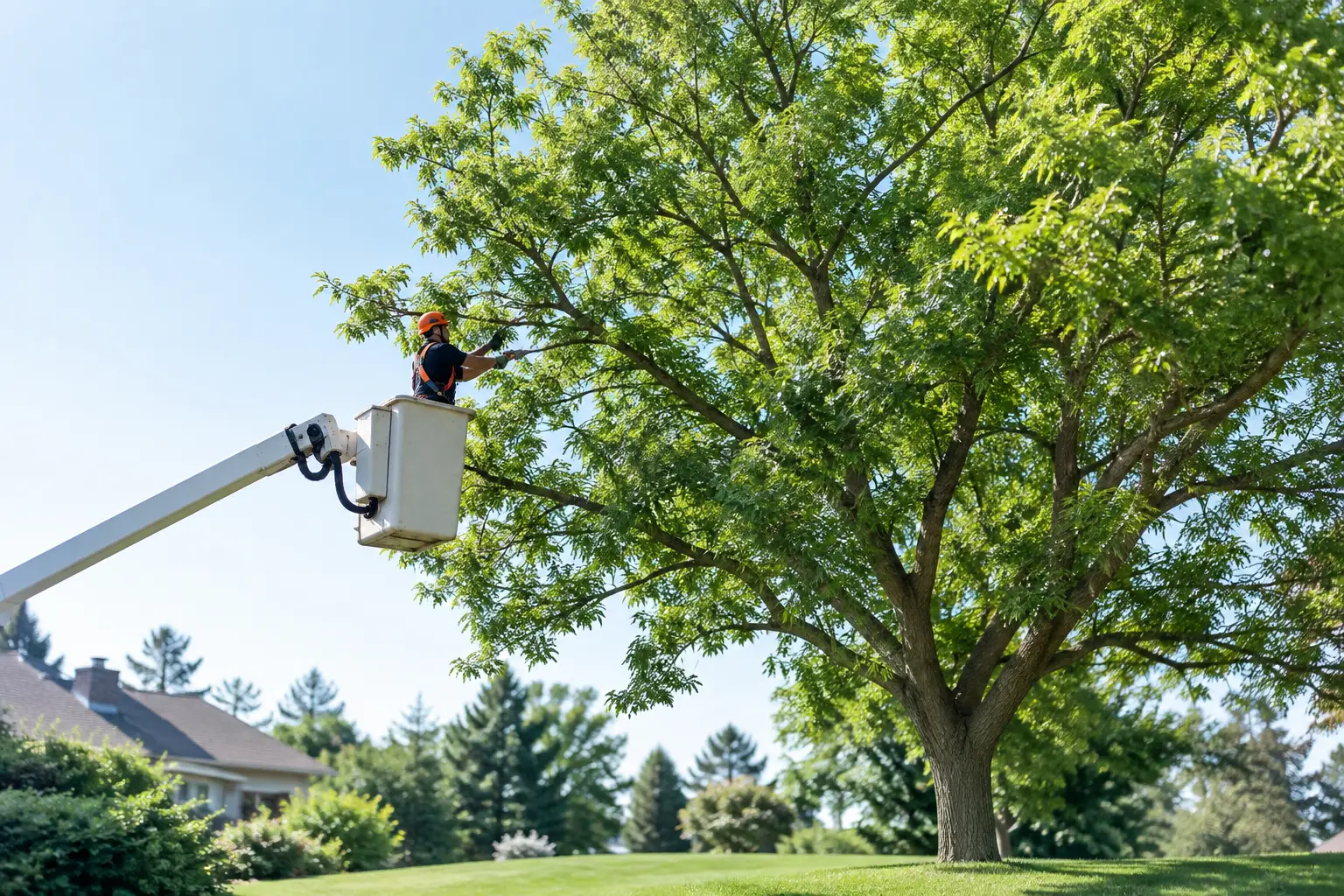
A practical guide to tree crown reduction for Lafayette homeowners: when it helps, what safe pruning looks like, and when to call a nearby profession…

See how crown thinning versus topping affects tree health, storm safety, and property risk - and why skilled pruning protects Louisiana and nearby ho…
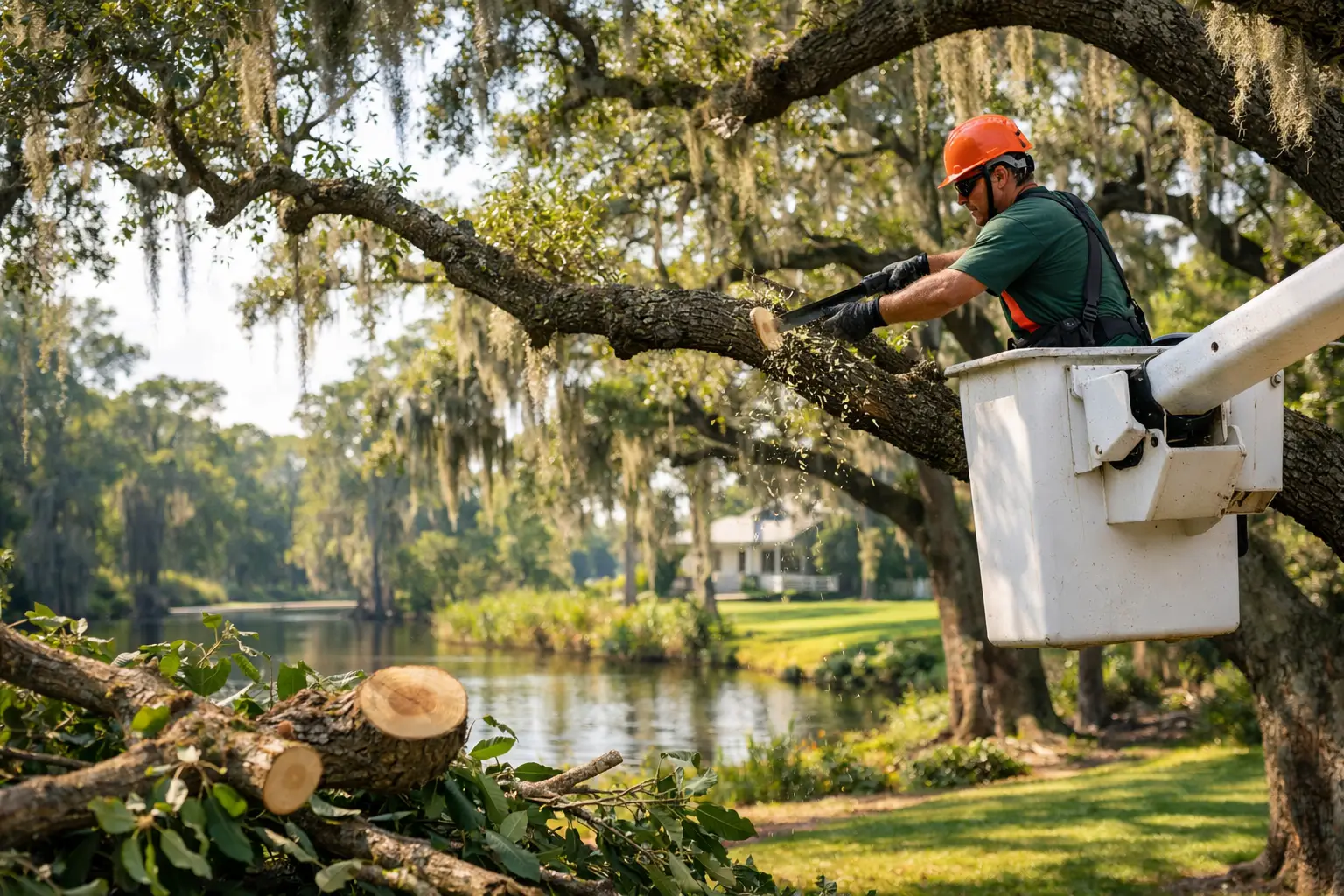
Learn when to prune live oaks in Louisiana, why timing limits oak wilt risk, and when a professional inspection protects your property and trees from…
Tell us about your trees and we'll get back to you, usually the same day.
“They were prompt for the actual survey and gave a fair estimate. Crew showed up and did the job ahead of planned date and did an amazing job.”
Loading the quote form…
Form not showing? Open the quote form or call (337) 568-2739.
Get a free, no-obligation estimate from Lafayette's locally owned tree service.