

Tree Cabling for Split Trunk Repair
Tree cabling for split trunk damage can reduce movement and lower failure risk. Learn when support helps, when removal is safer, and what to expect f…
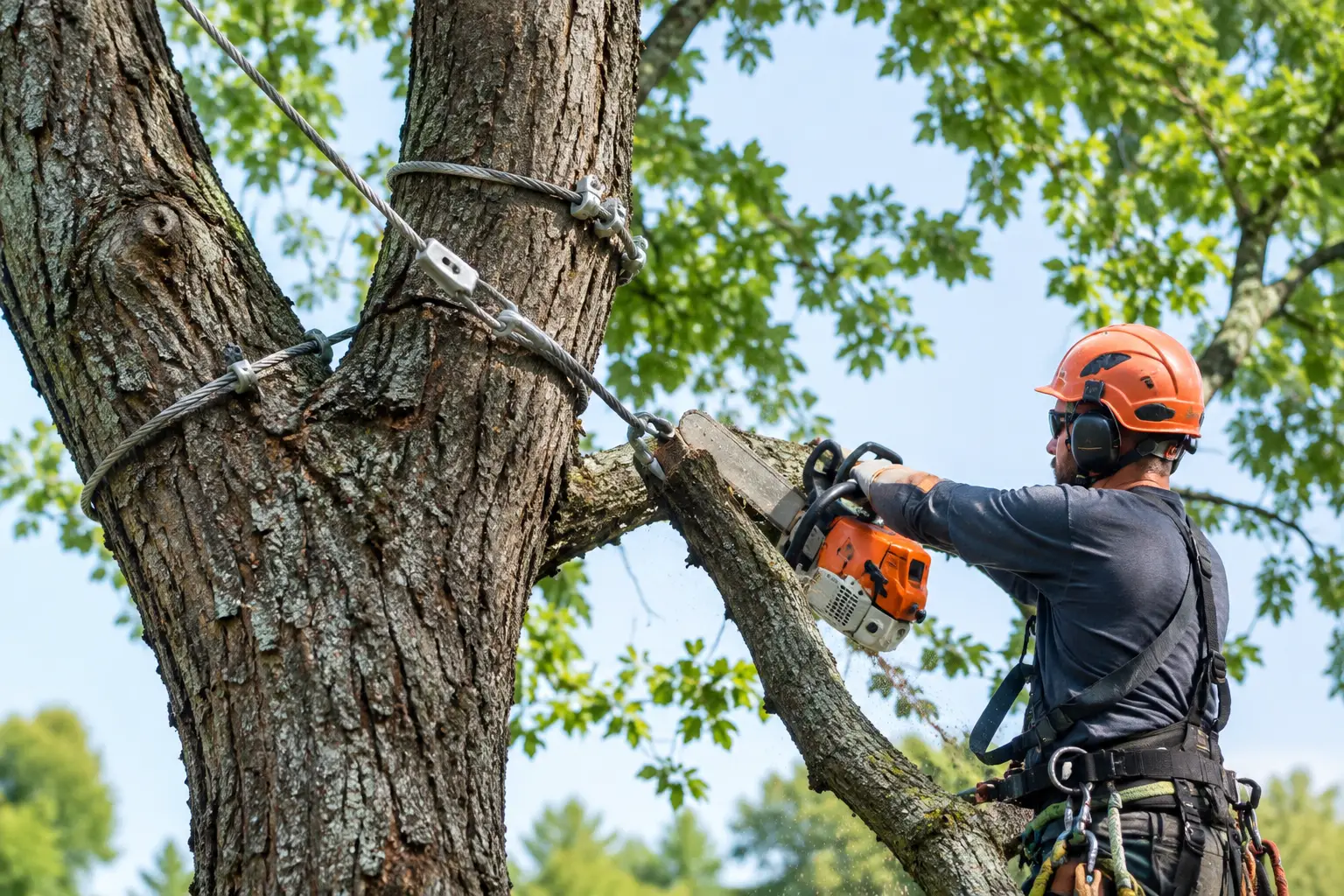
A heavy limb stretching over a roof, driveway, fence, or play area creates a decision that should not be made by appearance alone. Cabling versus limb removal is often the right question when a mature tree has a weak union, a split-prone branch, or a limb that has become too large for its attachment point. Both options can reduce risk, but they do very different jobs.
For homeowners across Lafayette and Acadiana, the best choice depends on the tree’s structure, health, location, and long-term prospects. A professional assessment can distinguish a limb worth supporting from one that needs to come down before wind, decay, or excess weight turns it into a property-damage emergency.
Tree cabling and bracing are structural support systems used to reduce movement and redistribute stress in selected limbs or trunks. A qualified tree care crew may install a flexible cable high in the canopy between major stems, or use bracing rods in certain split or cracked unions. The purpose is not to make a defective tree permanently safe. It is to lower the chance that a weak section fails under normal wind, rain, and seasonal leaf weight.
Cabling is most useful when the tree is otherwise healthy and valuable, but has a structural weakness that can be managed. This may include a large co-dominant stem with a narrow attachment, a mature limb extending over a home, or a tree with an included bark union. Included bark occurs when bark becomes trapped between two stems rather than forming a strong wood connection.
Modern dynamic cabling systems allow some natural movement while helping limit sudden overload. Static systems may be appropriate in more specific situations. The correct system, placement, and load considerations should follow accepted arboricultural practices, including ISA guidance where applicable. A cable installed too low, too tight, or without addressing the actual weak point can create a false sense of security.
A support system also needs periodic inspection. Trees continue to grow, hardware can require adjustment, and storms may change the condition of the supported limbs. Cabling is a maintenance commitment, not a one-time fix that can be forgotten.
Limb removal, also called reduction pruning or selective branch removal, removes the hazard rather than supporting it. This is usually the stronger recommendation when a branch is dead, heavily decayed, cracked, storm-damaged, rubbing against a structure, or growing directly into a utility area.
Removal is also often appropriate when a limb is simply too large relative to its attachment point. Even a cable cannot restore sound wood where decay has weakened the branch collar or where a major crack is already advancing. In those cases, retaining the limb may expose your home, vehicles, fence, or family to unnecessary risk.
Proper limb removal is not the same as cutting a branch back wherever it is convenient. Precision pruning considers branch collar protection, final limb weight, canopy balance, and the tree’s ability to compartmentalize pruning wounds. A poorly placed cut can leave a large wound, encourage weak regrowth, or throw the canopy out of balance.
For a branch that is alive but overextended, reduction pruning may be an option. Rather than removing the entire limb, the crew selectively shortens it back to suitable lateral branches. This reduces leverage and end weight while preserving more of the tree’s natural form. Whether reduction is practical depends on the limb’s size, available lateral growth, and underlying condition.
The decision between cabling versus limb removal comes down to risk management, not simply saving every branch. A homeowner may prefer to preserve shade and curb appeal, while the tree’s condition may call for a more conservative safety decision. The right recommendation weighs both priorities honestly.
Healthy wood with a structural weakness may respond well to cabling combined with selective pruning. Significant internal decay, fungal growth at the base of a limb, hollow sections, or a deep crack changes the equation. If the wood cannot reliably hold under load, removal is generally safer than adding hardware.
A visual inspection can reveal many warning signs, but some defects are hidden. Arborists look at bark patterns, branch unions, previous pruning cuts, canopy dieback, cavities, and the tree’s overall growth pattern before recommending a solution.
A large limb over a roof or outdoor living area carries greater consequences than the same limb over an open portion of the yard. Its location affects how much risk is acceptable. A limb that could strike a house, vehicle, pool enclosure, or power line may need removal even if cabling could reduce movement.
Likewise, a limb that is small enough to remove with minimal effect on the tree may not justify an ongoing cabling system. When removal can eliminate the risk cleanly and preserve the tree’s shape, it is often the simpler choice.
Cabling makes more sense for a healthy, established tree that provides meaningful shade, character, and landscape value. It may be especially worthwhile when removing a major limb would leave a severe imbalance or significantly reduce the tree’s appearance.
But preservation has limits. If a tree is in broad decline, has multiple failing unions, or presents repeated hazards after storms, investing in a support system may not be the most responsible use of your money. Strategic limb removal or full tree removal may better protect the property and allow for a healthier replacement planting plan.
A cabled tree requires reinspection, particularly after major storms. The support system may need servicing as the tree grows, and the weak union still deserves monitoring. Limb removal typically has less ongoing maintenance, although the tree should still receive routine pruning as it develops.
For homeowners who want a long-term, lower-maintenance solution near a house or driveway, removal can be the practical answer. For those preserving a treasured mature tree, cabling paired with monitoring may be worth the continued care.
When a limb feels dangerous, it can be tempting to cut it back aggressively. Topping - removing large portions of the canopy without proper reduction points - is not a reliable substitute for skilled pruning. It can trigger weak, fast-growing shoots, leave large wounds, and make the tree more hazardous over time.
A better approach is to identify the actual defect and choose the least invasive method that achieves a reasonable level of safety. That could be structural pruning, reduction, cabling, targeted limb removal, or, in serious cases, complete removal. The goal is not to make a tree look smaller for a few months. It is to manage risk while supporting the tree’s health where possible.
A site-specific assessment should begin with the whole tree, not just the visible problem limb. A trained crew will examine the trunk, root flare, canopy condition, branch attachments, signs of disease or decay, and nearby targets such as roofs, fences, driveways, and utility areas.
You should receive a clear explanation of why cabling, pruning, removal, or a combination of services is being recommended. For example, a healthy forked trunk may benefit from a cable and crown reduction, while a decayed limb over the garage may need safe removal with complete debris cleanup. The recommendation should reflect the condition on your property, not a one-size-fits-all answer.
Apex Tree Care helps homeowners make these decisions with safety-focused inspections, precision work, and a clean job site after the work is complete. Professional equipment and trained crews matter when working around structures, mature canopies, and difficult access areas.
If a limb has cracked, suddenly dropped leaves, begun rubbing your roof, or shifted after a storm, keep people and vehicles away from the area until it can be assessed. Acting before the next heavy wind can give you more choices - and often a safer, cleaner result for both your tree and your property.
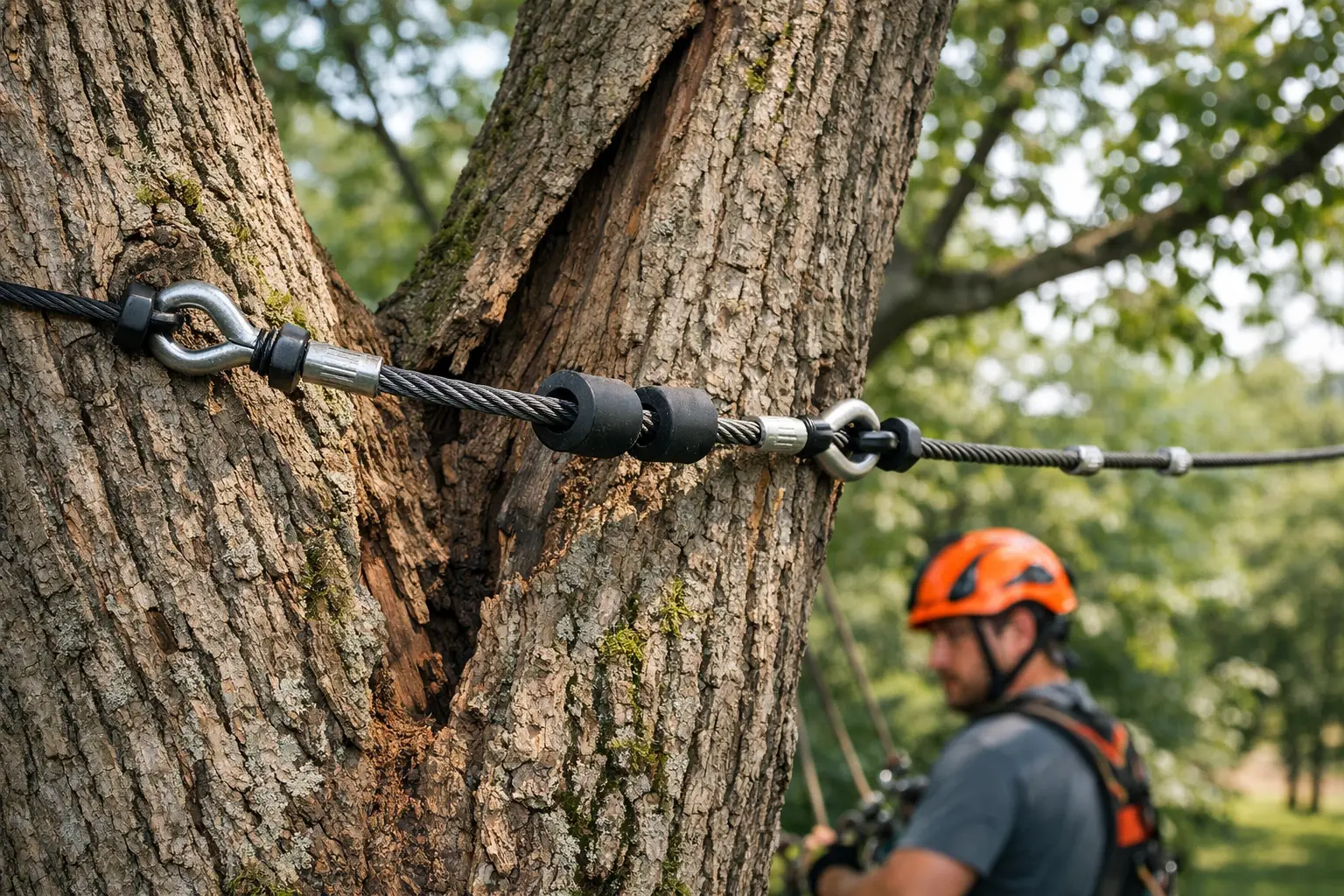
Tree cabling for split trunk damage can reduce movement and lower failure risk. Learn when support helps, when removal is safer, and what to expect f…
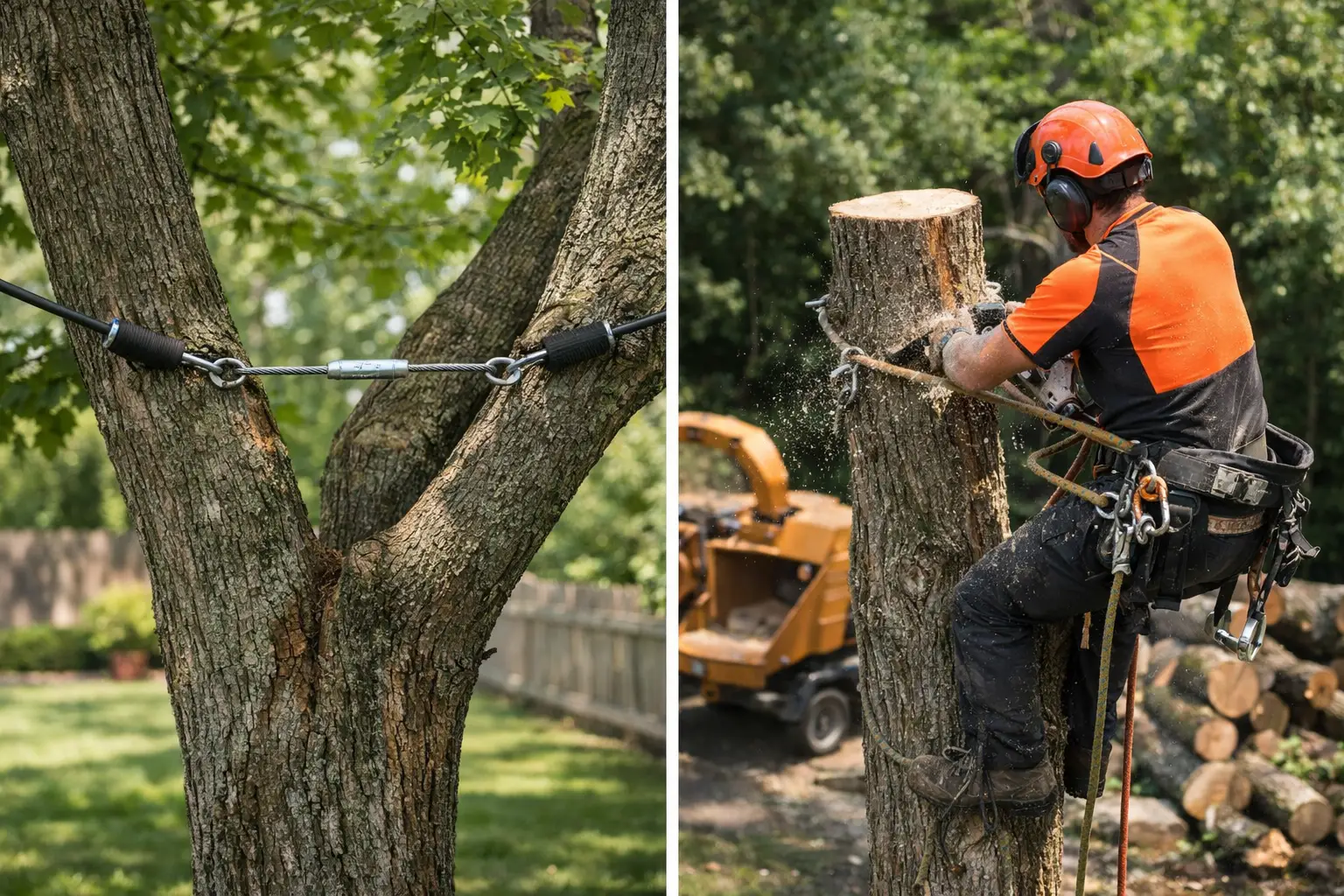
Tree bracing versus removal comes down to structure, risk, and location. Learn how Lafayette homeowners can protect their homes, yards, and trees saf…
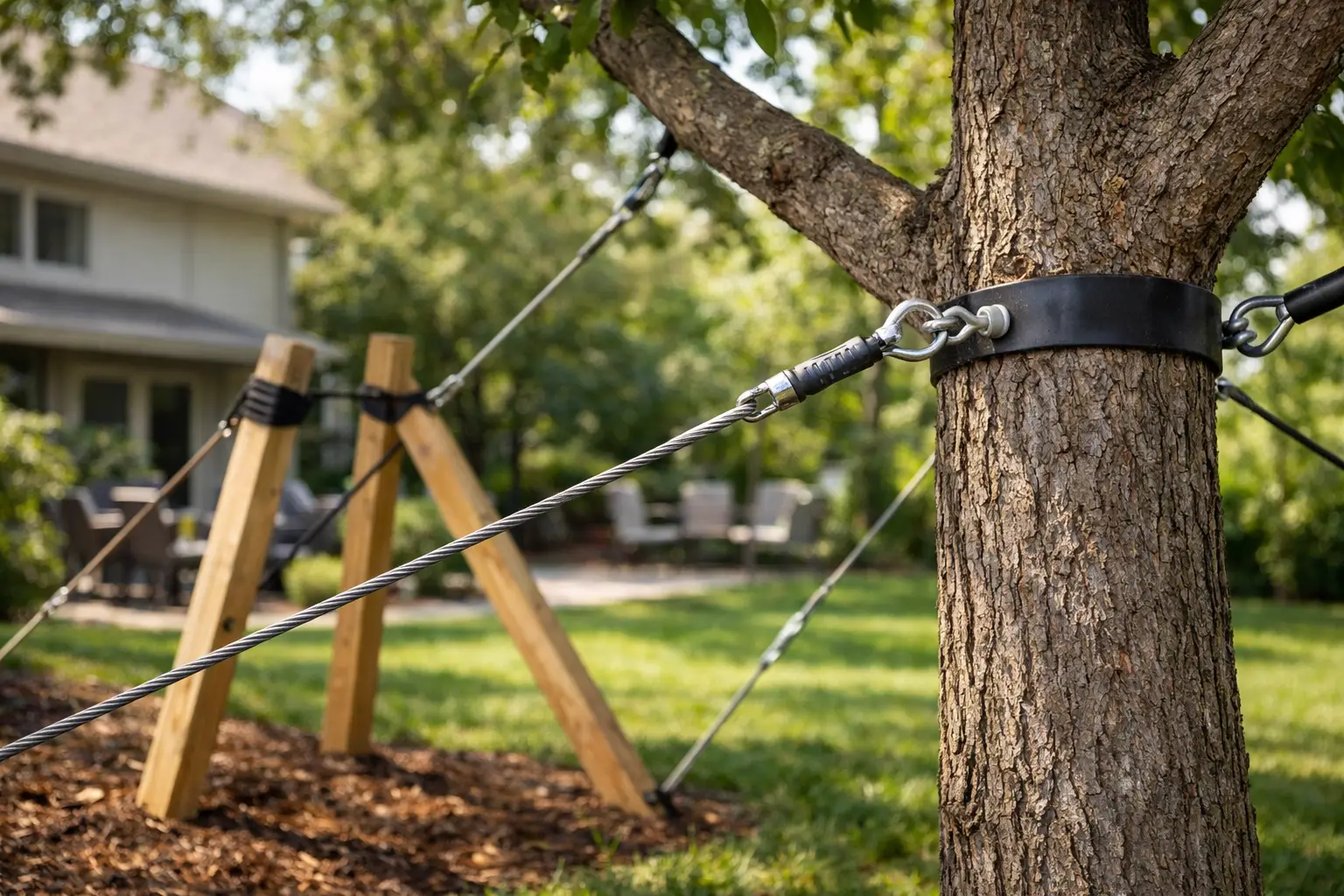
A guide to tree support systems explains when cabling and bracing reduce failure risk and when pruning or removal is the safer choice at your own hom…
Tell us about your trees and we'll get back to you, usually the same day.
“They were prompt for the actual survey and gave a fair estimate. Crew showed up and did the job ahead of planned date and did an amazing job.”
Loading the quote form…
Form not showing? Open the quote form or call (337) 568-2739.
Get a free, no-obligation estimate from Lafayette's locally owned tree service.