

10 Signs of a Hazardous Tree Around Your Home
Learn the signs of a hazardous tree, what raises risk in Louisiana weather, and when to call a professional for a safe property assessment near you n…
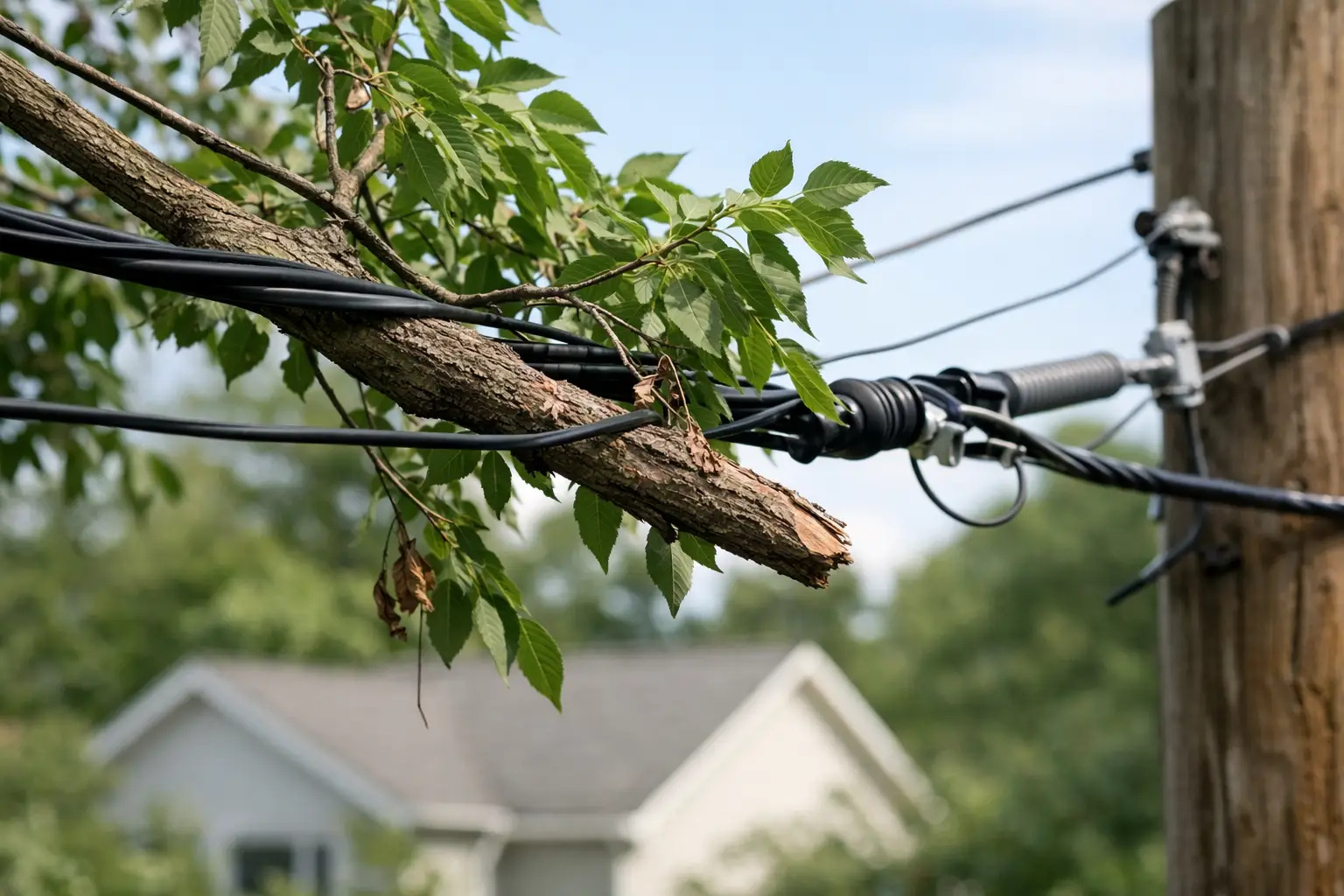
A limb resting on a power line can look harmless from the driveway, especially when the lights are still on. But branches touching power lines safety is never a do-it-yourself pruning job. Electricity can travel through wet wood, ladders, tools, fences, and the ground around a damaged line. In Lafayette and across Acadiana, heavy rain, high winds, and fast-growing trees can turn a small clearance issue into an urgent hazard.
The right response depends on whether the line is damaged, whether the branch is actively contacting it, and who owns the equipment. Your first job is not to diagnose the electrical problem. It is to keep people away, report the hazard, and let the utility and properly qualified professionals determine the safe next step.
A healthy-looking branch can still put pressure on an overhead line as it moves in the wind. Repeated rubbing may wear protective covering, damage connections, or pull service equipment loose. A dead or cracked limb is more concerning because it may fall without warning, bringing the line down with it.
Louisiana weather adds another layer of risk. Rain-soaked branches are heavier, storms can shift a tree's structure overnight, and saturated soil can weaken roots. What was a branch growing near a line last week may become a limb resting on it after a storm.
The danger is not limited to a visible spark. A line can remain energized even when it is on the ground, tangled in a tree, or silent. Electricity may energize nearby objects and the surrounding ground. That is why homeowners should treat every power line and every tree in contact with one as live.
If a branch is touching, hanging on, or visibly pulling a line, keep everyone away from the area. Do not touch the tree, the line, a metal fence, or anything else connected to the tree. Keep children and pets indoors or well clear of the area.
Call your electric utility to report the issue. Explain whether the branch is merely close to the line or is in direct contact, and report any signs of damage such as sparking, smoking, a popping sound, a leaning pole, flickering power, or a line on the ground. The utility can determine whether it needs to inspect the line, make repairs, or arrange specialized line-clearance work.
Call 911 first if a line is down, a fire is present, someone may be in danger, or you see active arcing. Stay at least 35 feet away from a downed line and the area around it. If a wire falls across a vehicle, remain inside the vehicle unless fire creates an immediate danger. Emergency personnel and the utility should direct the next steps.
Do not attempt to pull the limb free with a rope, pole pruner, rake, or truck. Do not climb the tree or set a ladder nearby. Even a tool that does not appear to touch the wire can bring you into a dangerous zone if the branch shifts.
This is where many homeowners get understandably confused. In general, the utility is responsible for its electrical equipment and for maintaining required clearance around many distribution lines. The homeowner is usually responsible for trees growing on private property and for maintenance around privately owned service equipment. The exact boundary can vary by utility, line type, easement, and location.
A utility may trim vegetation near its lines to preserve electrical reliability, but its work is focused on safe line clearance. It may not address every dead limb, overgrown canopy, or structural tree problem on your property. Once the electrical hazard is addressed, a tree care crew can evaluate the remaining pruning, removal, cleanup, or restoration work.
That distinction matters. A qualified tree company should not simply start cutting branches that contact energized lines. Work near electrical conductors requires the right training, procedures, equipment, and coordination. If an estimate shows that a tree is too close to energized equipment, the safe plan may involve utility notification, temporary service arrangements, or a line-clearance specialist before regular tree work begins.
You do not need to wait for a branch to break before making the call. Contact the utility promptly if a limb is resting directly on a line, visibly bending it, or repeatedly striking it in the wind. The same applies if the line appears sagging, damaged, or lower than usual.
Other warning signs include scorch marks on bark, buzzing or crackling sounds, sparks, smoke, sudden flickering lights, or a service line that has pulled away from the house. Treat these as electrical concerns, not routine yard maintenance.
A tree that has split, uprooted, or developed a major hanging limb near overhead wires also deserves quick attention. The utility may need to secure its equipment before any removal work can begin. Taking action early can prevent an outage, property damage, and a much more complicated emergency response.
The best time to deal with tree-to-wire conflicts is before a tropical system or severe thunderstorm is in the forecast. Walk your property from the street and look up at mature trees near utility corridors, service drops, driveways, and outdoor living areas. You are not measuring electrical clearances yourself. You are looking for branches that are growing toward lines, limbs with visible decay, and crowded canopies that could fail under wind and rain.
Regular precision pruning can reduce the chance of weak limbs reaching utility areas. Proper pruning is selective. It removes dead, damaged, rubbing, and poorly attached growth while preserving the tree's structure and appearance. Topping a tree or cutting large sections off without a plan can create weak regrowth and make the problem worse over time.
Sometimes pruning is the right answer. Sometimes a declining tree, a severely leaning trunk, or a tree planted too close to electrical infrastructure should be removed and replaced with a more suitable species. The practical choice depends on the tree's health, location, size, and long-term risk to your home and utility access.
For a tree near power lines, an on-site assessment should look beyond the branch you can see from the ground. A trained crew evaluates deadwood, cavities, cracks, trunk lean, root-zone disturbance, limb attachments, canopy weight, and the tree's distance from the house, fence, driveway, and utility equipment.
The assessment should also establish the work boundary. If the tree can be safely pruned away from utility equipment after the utility has cleared the hazard, the crew can plan controlled cuts, lowering methods, and debris removal. If electrical contact is still present, the job may need to pause until the responsible utility or qualified electrical line-clearance provider has made the site safe.
That approach may feel slower than grabbing a saw on a Saturday morning, but it protects people and prevents costly damage. It also keeps the job organized: electrical concerns are handled first, tree hazards are addressed second, and the property is left clean when the work is complete.
Until the utility or emergency responders arrive, create distance rather than trying to create a solution. Keep gates closed, move vehicles only if they can be moved without approaching the hazard, and tell neighbors not to enter the area. Avoid running sprinklers near the tree or line, especially if there is visible damage.
If the issue involves a branch near your home's service line, do not assume turning off a breaker makes the exterior line safe. Service equipment may still be energized. Let the utility confirm the condition of the line and advise on any needed electrical repair.
Apex Tree Care helps Lafayette-area homeowners address the tree problems that remain once electrical safety has been established, from careful pruning and hazardous tree removal to full debris cleanup. When a tree starts crowding a utility area, an early assessment gives you more safe options than waiting for the next hard wind to make the decision for you.

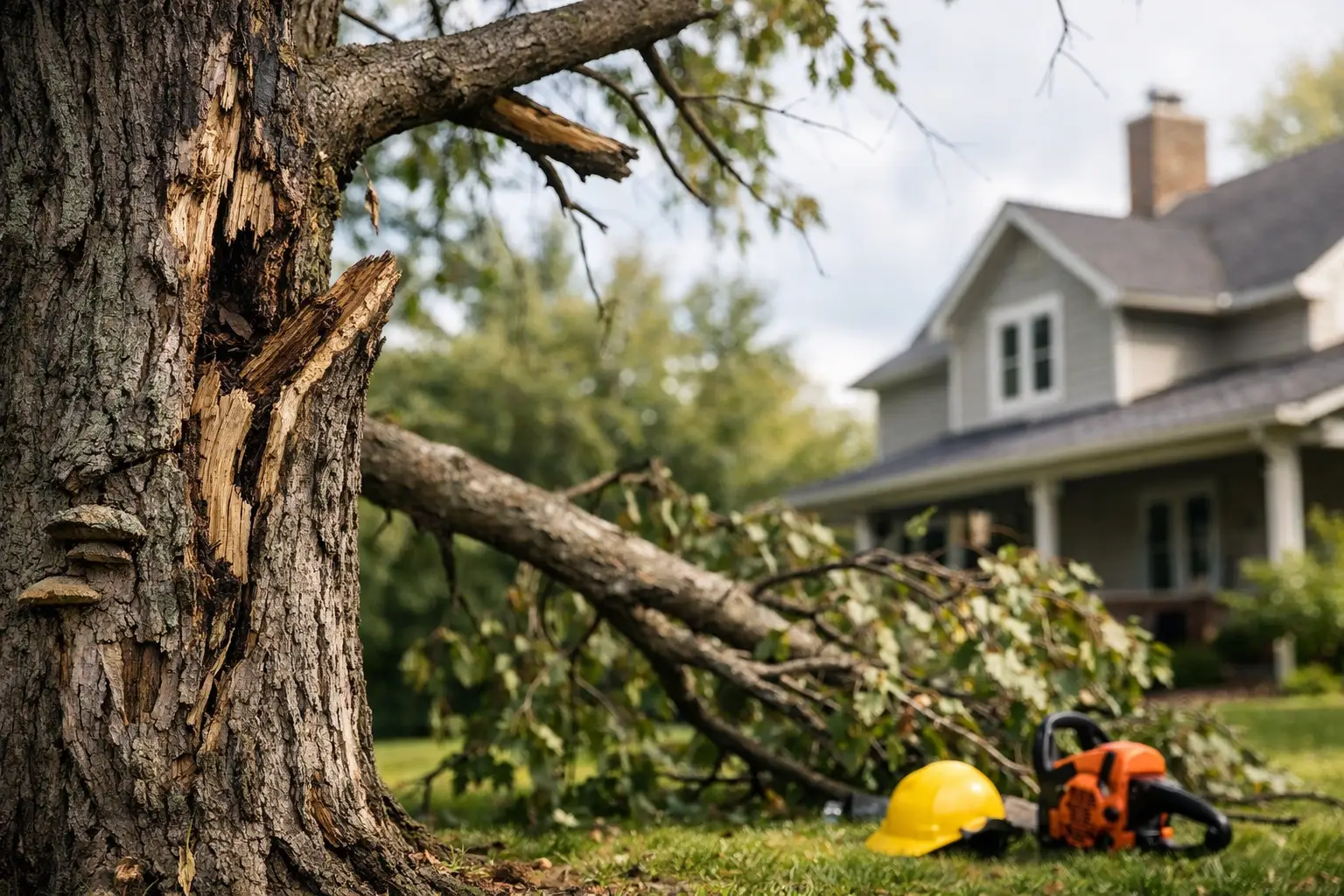
Learn the signs of a hazardous tree, what raises risk in Louisiana weather, and when to call a professional for a safe property assessment near you n…
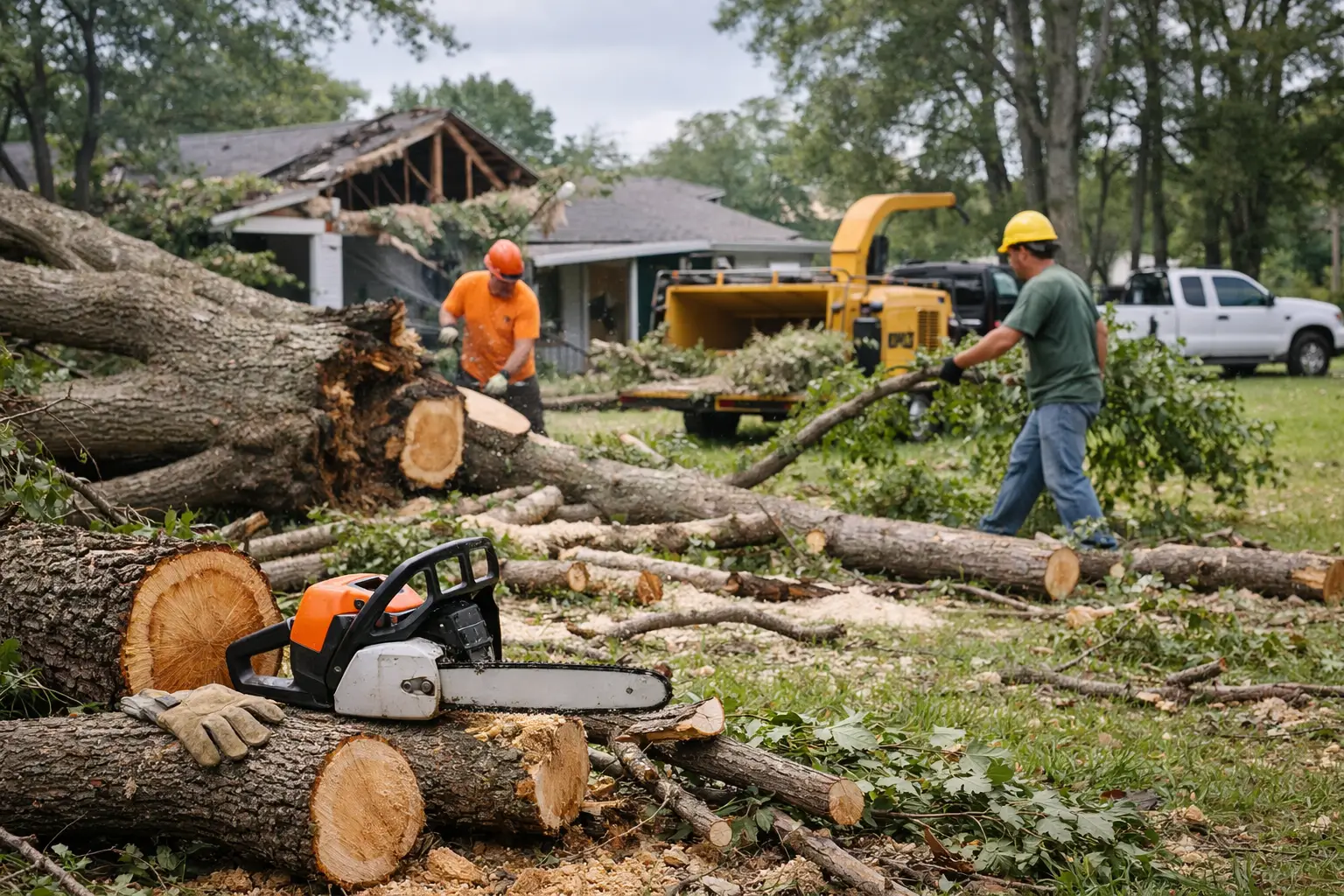
Tree damage restoration protects your Lafayette-area home after storms. Learn what to do first, when to call a pro, and how to protect your yard safe…

Storm damage recovery for Lafayette homeowners: assess tree hazards, protect your property, document damage, and plan safe cleanup after severe weath…
Tell us about your trees and we'll get back to you, usually the same day.
“They were prompt for the actual survey and gave a fair estimate. Crew showed up and did the job ahead of planned date and did an amazing job.”
Loading the quote form…
Form not showing? Open the quote form or call (337) 568-2739.
Get a free, no-obligation estimate from Lafayette's locally owned tree service.